
Advanced Noise Analysis for Reliable Machine Vision
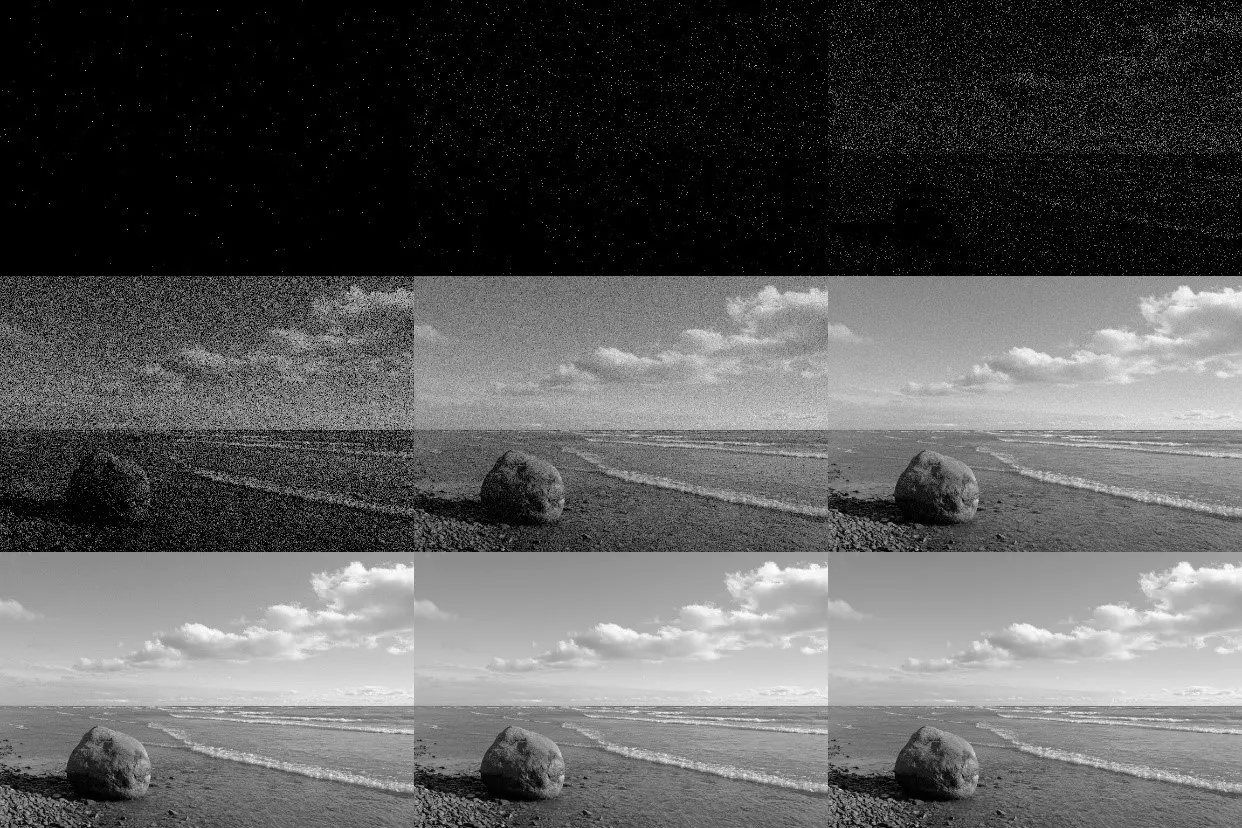
In machine vision, precision is everything. Yet one persistent challenge continues to impact image quality and system reliability: noise. Defined as unwanted artifacts that do not originate from the actual scene, noise appears as a grainy structure overlaying the image, which hides critical details and reducing overall accuracy.
At its core, noise is a statistical fluctuation in the signal, introduced by random processes during image acquisition. The result? Reduced signal clarity and compromised performance in even the most advanced vision systems.
Understanding the Challenge
Noise is not part of the signal, it actively obscures the information you want to measure. This makes optimizing the signal-to-noise ratio (SNR) one of the most critical tasks in imaging, especially under low-light conditions where signals are inherently weak.
To effectively manage noise, it’s essential to understand its different forms:
Temporal Noise (Random Noise):
Caused by fluctuations in photon arrival and electron generation. Even when imaging a static scene, pixel values vary across frames.Spatial Noise (Non-Uniformity):
Results from pixel-to-pixel variations on the sensor, such as PRNU (Pixel Response Non-Uniformity) and DSNU (Dark Signal Non-Uniformity).Color vs. Intensity Noise:
While monochrome sensors primarily exhibit intensity noise, color sensors introduce additional complexity through demosaicing, often amplifying noise, especially in the blue channel.
Sources and Optimization Strategies
Noise originates primarily from two sources:
Photon Shot Noise:
The light itself causes this effect, the more light (photons) you have, the clearer the signal becomes.Read Noise:
Introduced during sensor readout, particularly impactful in low-signal environments.
Improving noise performance requires a combination of hardware and software strategies:
Increasing photon capture (larger pixels, longer exposure)
Reducing sensor read noise
Applying advanced image processing and noise reduction algorithms
However, every improvement involves trade-offs, such as motion blur or system complexity, making expertise essential.
Measuring What Matters
Accurate noise evaluation is key to optimizing machine vision systems. Industry standards such as ISO 15739 and EMVA 1288 provide robust frameworks for measurement:
SNR (Signal-to-Noise Ratio): Quantifies signal quality
Visual Noise (VN): Reflects human perception of noise
Dead Leaves Pattern: Simulates real-world textures for realistic testing
These methods ensure that performance metrics align with both technical requirements and real-world applications.
Why Image Engineering Makes the Difference
At Image Engineering, we combine deep technical expertise with state-of-the-art testing methodologies to tackle noise at its source. Our approach goes beyond theoretical metrics:
Precise testing based on ISO 15739 and EMVA 1288 standards
Advanced lab setups, including dead leaves pattern analysis
Focus on application-driven optimization, not just lab performance
We understand that every imaging system has unique requirements. That’s why we deliver tailored solutions, maximizing signal clarity while minimizing noise impact.
Conclusion
Noise is inevitable, but its impact doesn’t have to be. By understanding its origins, types, and measurement techniques, machine vision systems can be optimized for superior performance.
With Image Engineering as your partner, you gain more than insight, you gain clarity, precision, and confidence in every pixel.