
Your Partner for Objective Camera & Sensor Testing
Cameras and sensors sit at the heart of almost every product today, from the phone in your pocket to the ADAS system guiding a car down the highway. But "good image quality" means something different depending on who you ask, and that's exactly the kind of question our iQ-Lab was built to answer with numbers instead of opinions. For more than three decades, we have helped manufacturers, suppliers, and integrators across the imaging industry put a number on quality, so that every conversation about a sensor, lens, or camera system can start from facts everyone agrees on.
Neutral by Design
Flexible across the entire imaging landscape
Imaging components show up everywhere, and so does our lab. From smartphone and webcam cameras to automotive, security, and machine vision systems, we adapt our test setups, charts, and protocols to the device in front of us rather than forcing every project through the same template. If a standardized test method exists for your application, we run it. If your project needs something the standards haven't caught up with yet, we design a custom methodology around your component, your performance target, and your stage in development. Flexibility isn't a marketing word for us, it's daily practice in a lab that handles everything from individual lenses and sensors to fully assembled imaging systems.
Deep knowledge of the imaging industry
A common language for you and your suppliers
One of the most valuable things an independent lab can offer isn't a single number, but a shared reference point. When a customer and a supplier disagree about whether a component meets specification, or when two teams describe the same image quality issue in different terms, the iQ-Lab's standardized, transparent, repeatable measurements give both sides something objective to discuss instead of arguing past each other. Because our methods are documented, traceable to recognized international standards, and reproducible by any lab using the same approach, our reports become common ground: a neutral basis that you, your suppliers, and your partners can all build the next conversation on.
Three pillars for your development cycle
Wherever you are in the lifecycle of an imaging component or system, the iQ-Lab supports your project through three complementary pillars
Characterization
Qualification
Validation
At key milestones and before launch, validation confirms that the finished component or system performs as intended, measured against recognized industry standards and your own requirements. From automotive systems tested under IEEE-P2020 and camPAS, to smartphone cameras scored under the VCX standard or machine vision systems assessed per EMVA 1288, validation gives you independent, third-party proof that your imaging system is ready for the real world, and gives your stakeholders, partners, and customers that same confidence.
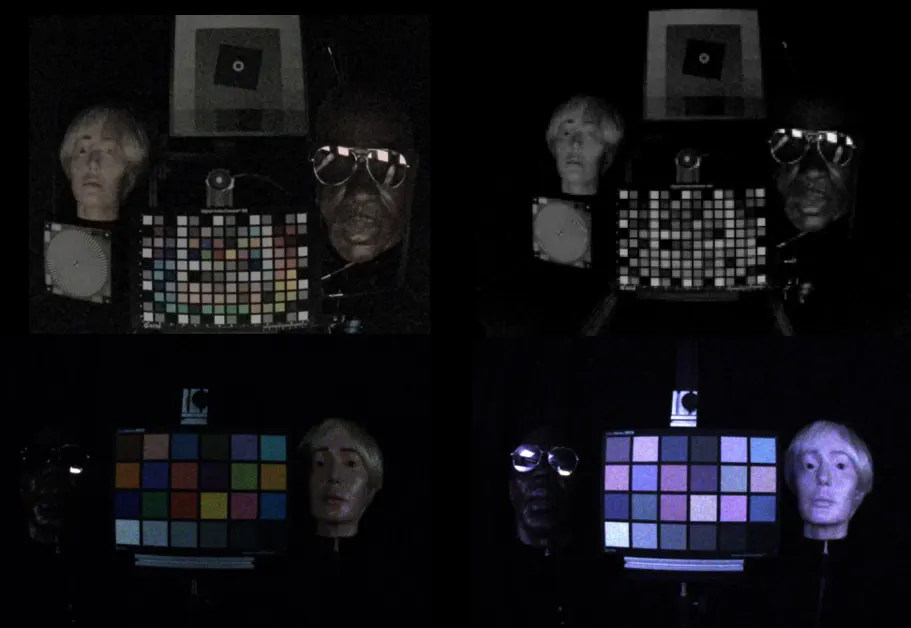
Near-infrared and RGB-IR imaging
Near-infrared and RGB-IR imaging is no longer a niche request. Driver monitoring, in-cabin sensing, access control, and security cameras increasingly rely on RGB-IR sensors that pack a dedicated infrared pixel right alongside red, green, and blue in the same color filter array, letting one camera deliver a clean color image by day and a usable IR image by night. That convenience comes with real image quality risk: infrared leakage into the visible channels, color contamination, and demosaicing artifacts that only show up under the right test conditions. Our dedicated VIS-IR setup , illumination devices spanning the visible and near-infrared range alongside purpose-built test charts , lets us characterize resolution, noise, dynamic range, spectral sensitivity, and color separation across a sensor's full operating range, in daylight and at 850 nm or 940 nm alike.
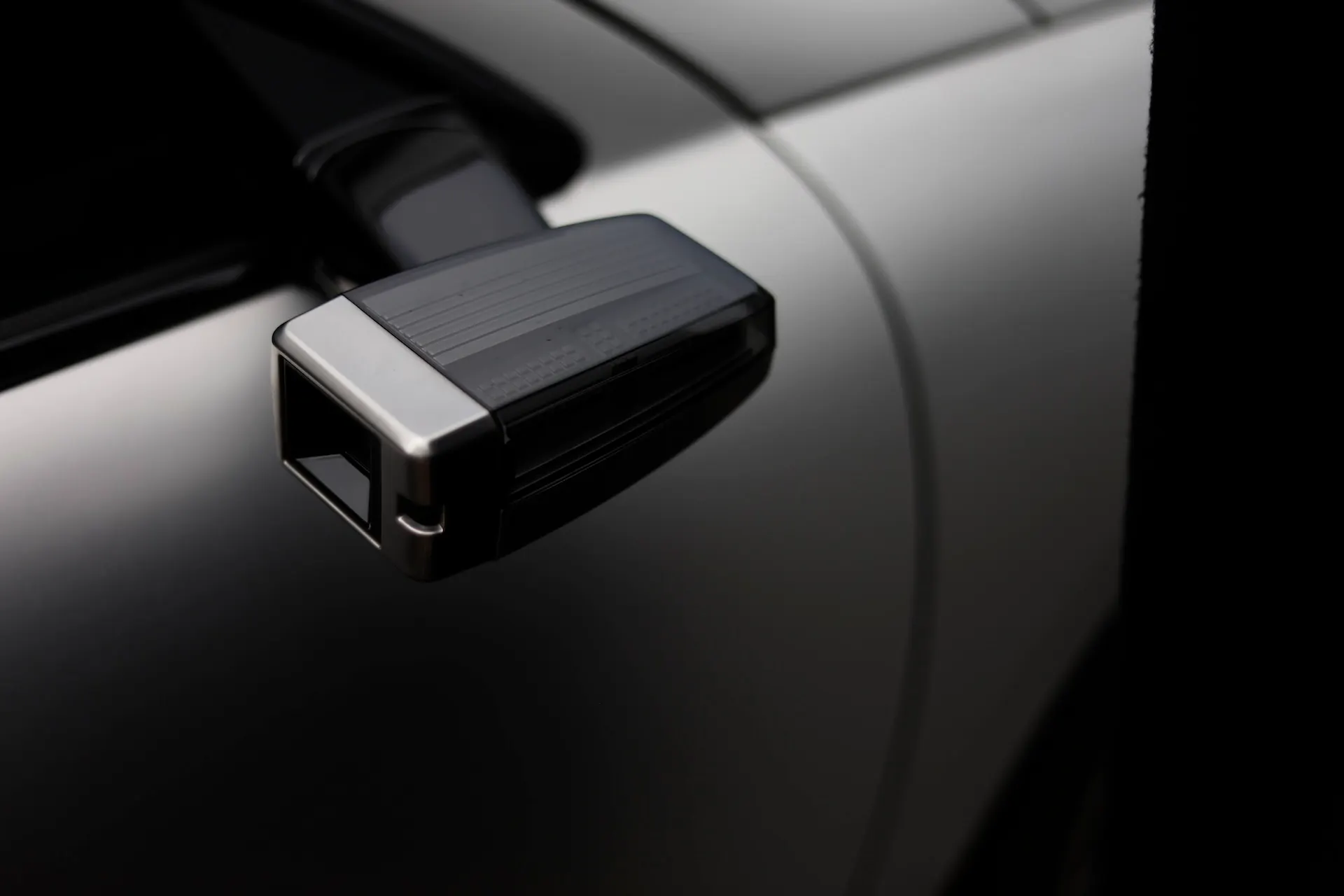
Mirror replacement systems tested to ISO 16505
Mirror replacement systems tested to ISO 16505 address a different kind of pressure: regulatory. As more passenger and commercial vehicles trade physical mirrors for camera monitor systems, ISO 16505 sets the minimum safety, ergonomic, and performance requirements a CMS must meet to legally replace a mandatory mirror under UN Regulation No. 46 — covering field of view, magnification, resolution, color reproduction, distortion, and timing. Here, passing the test isn't a marketing claim, it's the difference between a vehicle being road-legal or not, which makes an independent, standard-driven measurement the kind of common ground both you and your type-approval body can stand on.