

Measuring Camera Shaking in Mobile Phone Cameras
Achieving superior mobile photography demands robust image stabilization to ensure sharp, shake-free images in any situation. Mobile camera development requires precise testing to guarantee consistent image quality under real-world conditions. Learn how advanced measurement setups and standardized testing profiles are essential for optimizing stabilization technologies and delivering exceptional user experiences.
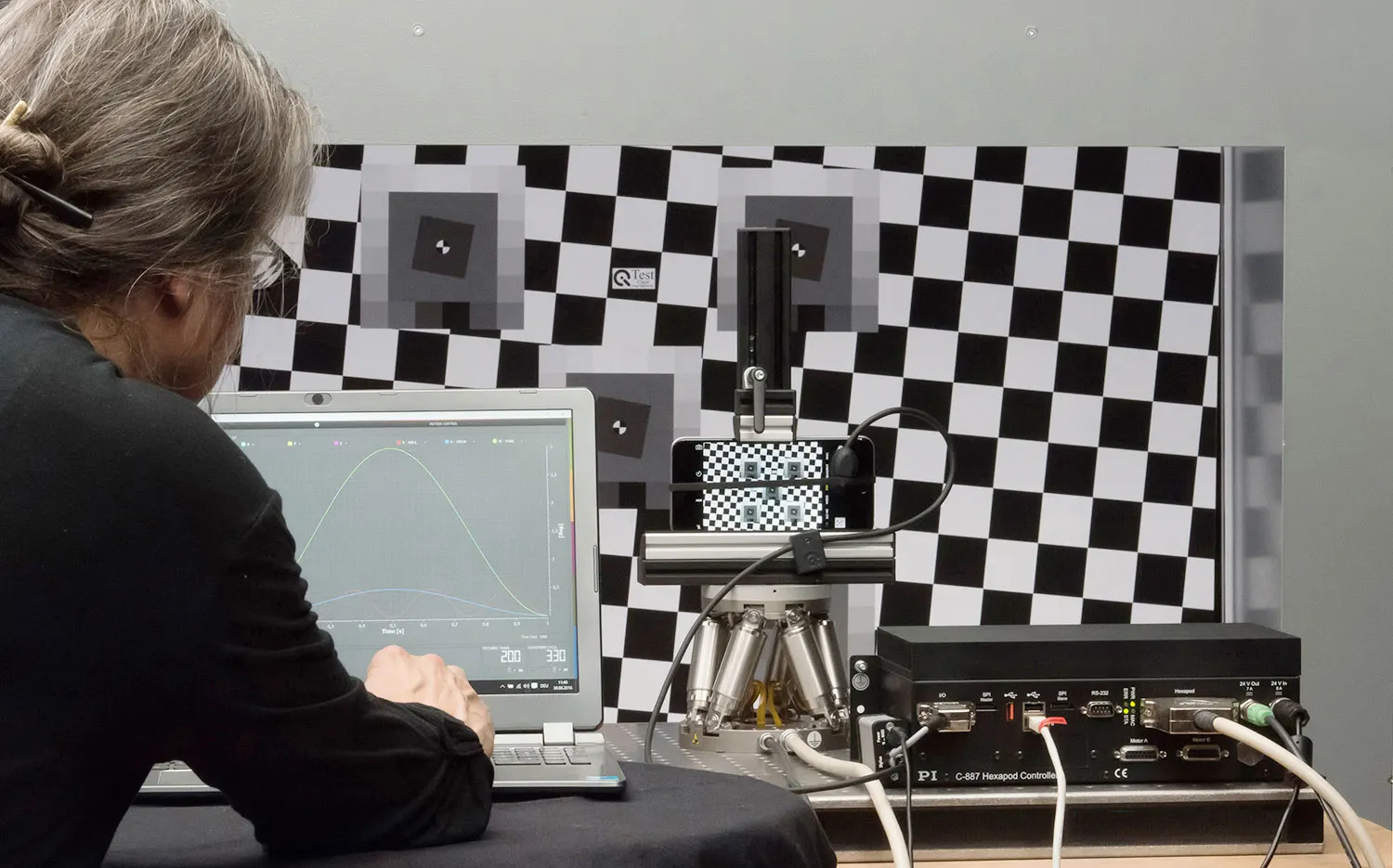
Modern mobile phone cameras are expected to deliver sharp images in almost any situation, whether users are walking, cycling or recording while on the move. Accurately measuring camera shaking has therefore become a key part of smartphone camera development and testing, ensuring consistent image quality.
Traditionally, image stabilisation tests focused on simulating human hand tremors in controlled laboratory environments. However, testing has now evolved to reflect real-world conditions, in which smartphones are used in many dynamic scenarios. Advanced measurement setups and sensor-based recordings enable engineers to capture and reproduce realistic motion patterns in laboratory tests.
Using the built-in gyroscope sensors of smartphones, shaking profiles can be recorded directly during normal use. These datasets describe the three main contributors to image blur during exposure: roll, pitch and yaw. The recorded data can then be processed and imported into specialised test systems to reproduce the exact motion in a controlled and repeatable way.
High-precision motion platforms with multiple degrees of freedom can simulate these movements and evaluate the performance of optical image stabilisation (OIS) systems. This enables engineers to analyse how effectively a smartphone camera compensates for shaking and maintains image sharpness under realistic conditions.
As mobile photography continues to evolve, standardised shaking profiles and advanced measurement techniques will play a crucial role in optimising stabilisation technologies and ensuring the highest possible image quality for smartphone users.