
Spectral Sensitivity - The method is suitable for all scenarios where it is essential to examine only a part of the whole imaging system, like both lens and camera sensor comparison. Spectral measurement methods The “camSPECS express” is used to determine the spectral sensitivity of a camera system. It is based on 36 illuminated narrow-band interference filters (380 – 905 nm) and 42 neutral density filters to reference the luminance and correct shading effects in the image plane. Usually it is of advantage to measure the whole system, namely the sensor and the lens as they are used together. In some cases however it is useful to know the spectral sensitivity of the sensor e.g. when comparing lenses. Other methods often require a whole set of test images. One for each measured bandwidth. The biggest advantage of “camSPECS express” is the possibility to determine results with only two images (measurement image and dark frame). Therefore the test target must be projected on the camera sensor and a focusing lens is needed, which affects the measurement. In case of SLRs and system cameras the simplest solution to get rid of the lens, is to use a pinhole in front of the sensor. It can be integrated into the body cap as seen in figure 2. Measurement example For demonstration purposes we have tested an SLR with an ordinary lens and compared the results with the pinhole measurement. As you can see in figure 4 only relative measurements are possible. The curves are normed to the highest measured intensity in the green channel. Never the less, the results show some useful information. The wavelength dependent transmission variation is clearly noticeable. The lens absorption factor for radiation with shorter wavelength about 400 – 500 nm is higher than for the rest of the visible spectrum. This method is suitable for all scenarios where it is essential to examine only a part of the whole imaging system, like both lens and sensor comparison. Best regards Your Research & Development Team The method is suitable for all scenarios where it is essential to examine only a part of the whole imaging system, like both lens and sensor comparison. Spectral measurement methods The “camSPECS express” is used to determine the spectral sensitivity of a camera system. It is based on 36 illuminated narrow-band interference filters (380 – 905 nm) and 42 neutral density filters to reference the luminance and correct shading effects in the image plane. Usually it is of advantage to measure the whole system, namely the sensor and the lens as they are used together. In some cases however it is useful to know the spectral sensitivity of the sensor e.g. when comparing lenses. Other methods often require a whole set of test images. One for each measured bandwidth. The biggest advantage of “camSPECS express” is the possibility to determine results with only two images (measurement image and dark frame). Therefore the test target must be projected on the camera sensor and a focusing lens is needed, which affects the measurement. In case of SLRs and system cameras the simplest solution to get rid of the lens, is to use a pinhole in front of the sensor. It can be integrated into the body cap as seen in figure 2. Measurement example For demonstration purposes we have tested an SLR with an ordinary lens and compared the results with the pinhole measurement. As you can see in figure 4 only relative measurements are possible. The curves are normed to the highest measured intensity in the green channel. Never the less, the results show some useful information. The wavelength dependent transmission variation is clearly noticeable. The lens absorption factor for radiation with shorter wavelength about 400 – 500 nm is higher than for the rest of the visible spectrum. This method is suitable for all scenarios where it is essential to examine only a part of the whole imaging system, like both lens and sensor comparison. Best regards Your Research & Development Team
Spectral Sensitivity - The method is suitable for all scenarios where it is essential to examine only a part of the whole imaging system, like both lens and sensor comparison. Spectral measurement methods The “camSPECS express” is used to determine the spectral sensitivity of a camera system. It is based on 36 illuminated narrow-band interference filters (380 – 905 nm) and 42 neutral density filters to reference the luminance and correct shading effects in the image plane. Usually it is of advantage to measure the whole system, namely the sensor and the lens as they are used together. In some cases however it is useful to know the spectral sensitivity of the sensor e.g. when comparing lenses. Other methods often require a whole set of test images. One for each measured bandwidth. The biggest advantage of “camSPECS express” is the possibility to determine results with only two images (measurement image and dark frame). Therefore the test target must be projected on the camera sensor and a focusing lens is needed, which affects the measurement. In case of SLRs and system cameras the simplest solution to get rid of the lens, is to use a pinhole in front of the sensor. It can be integrated into the body cap as seen in figure 2. Measurement example For demonstration purposes we have tested an SLR with an ordinary lens and compared the results with the pinhole measurement. As you can see in figure 4 only relative measurements are possible. The curves are normed to the highest measured intensity in the green channel. Never the less, the results show some useful information. The wavelength dependent transmission variation is clearly noticeable. The lens absorption factor for radiation with shorter wavelength about 400 – 500 nm is higher than for the rest of the visible spectrum. This method is suitable for all scenarios where it is essential to examine only a part of the whole imaging system, like both lens and sensor comparison. Best regards Your Research & Development Team
The method is suitable for all scenarios where it is essential to examine only a part of the whole imaging system, like both lens and sensor comparison.
The “camSPECS express” is used to determine the spectral sensitivity of a camera system. It is based on 36 illuminated narrow-band interference filters (380 – 905 nm) and 42 neutral density filters to reference the luminance and correct shading effects in the image plane.
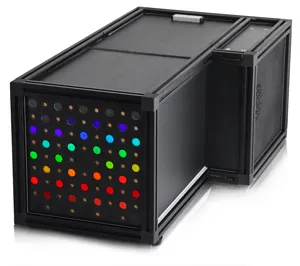
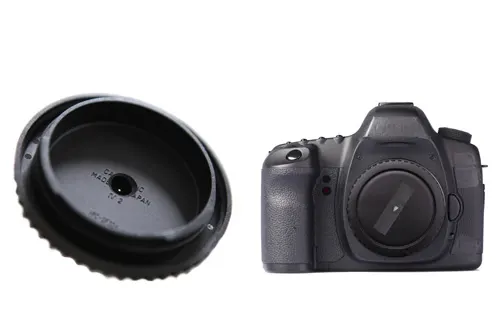
Usually it is of advantage to measure the whole system, namely the sensor and the lens as they are used together. In some cases however it is useful to know the spectral sensitivity of the sensor e.g. when comparing lenses. Other methods often require a whole set of test images. One for each measured bandwidth. The biggest advantage of “camSPECS express” is the possibility to determine results with only two images (measurement image and dark frame). Therefore the test target must be projected on the camera sensor and a focusing lens is needed, which affects the measurement. In case of SLRs and system cameras the simplest solution to get rid of the lens, is to use a pinhole in front of the sensor. It can be integrated into the body cap as seen in figure 2.
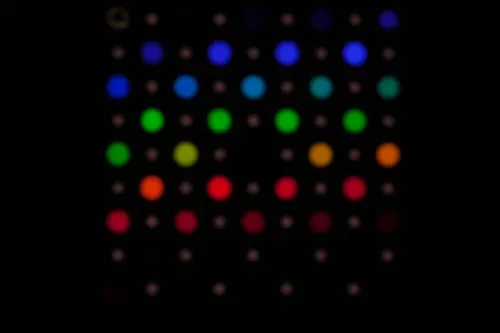
For demonstration purposes we have tested an SLR with an ordinary lens and compared the results with the pinhole measurement. As you can see in figure 4 only relative measurements are possible. The curves are normed to the highest measured intensity in the green channel. Never the less, the results show some useful information. The wavelength dependent transmission variation is clearly noticeable. The lens absorption factor for radiation with shorter wavelength about 400 – 500 nm is higher than for the rest of the visible spectrum.
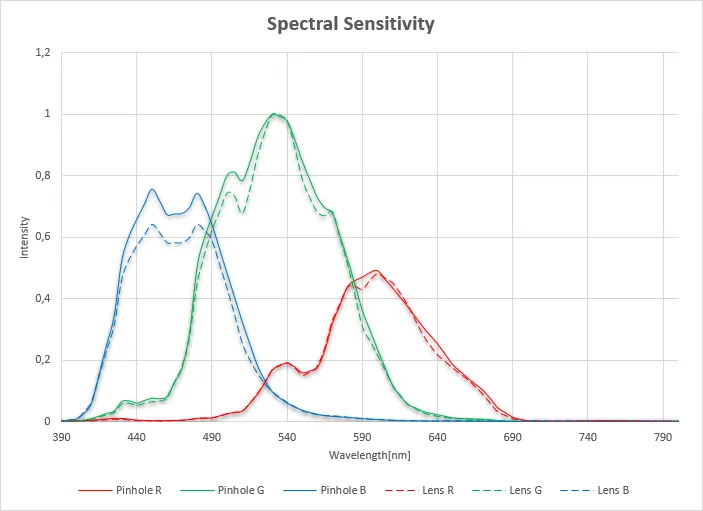
This method is suitable for all scenarios where it is essential to examine only a part of the whole imaging system, like both lens and sensor comparison.
Best regards
Your Research & Development Team