
Introduction
Lenses are designed so that light refracted at a lens meets at one focal point. Light, however, contains various wavelengths that refract differently. So light rays of different wavelengths (red, blue, and green, for example) may not meet at a common point. When this happens, color fringes appear along the borders of very light or very dark parts of an image affecting the image quality.
The background of chromatic aberration
Chromatic aberration is caused by the dispersion of light best demonstrated by using a prism (in our case, a lens). Dispersion is the separation of visible light into its different wavelengths. The light that passes from one material to another will be refracted or bent at the boundaries.
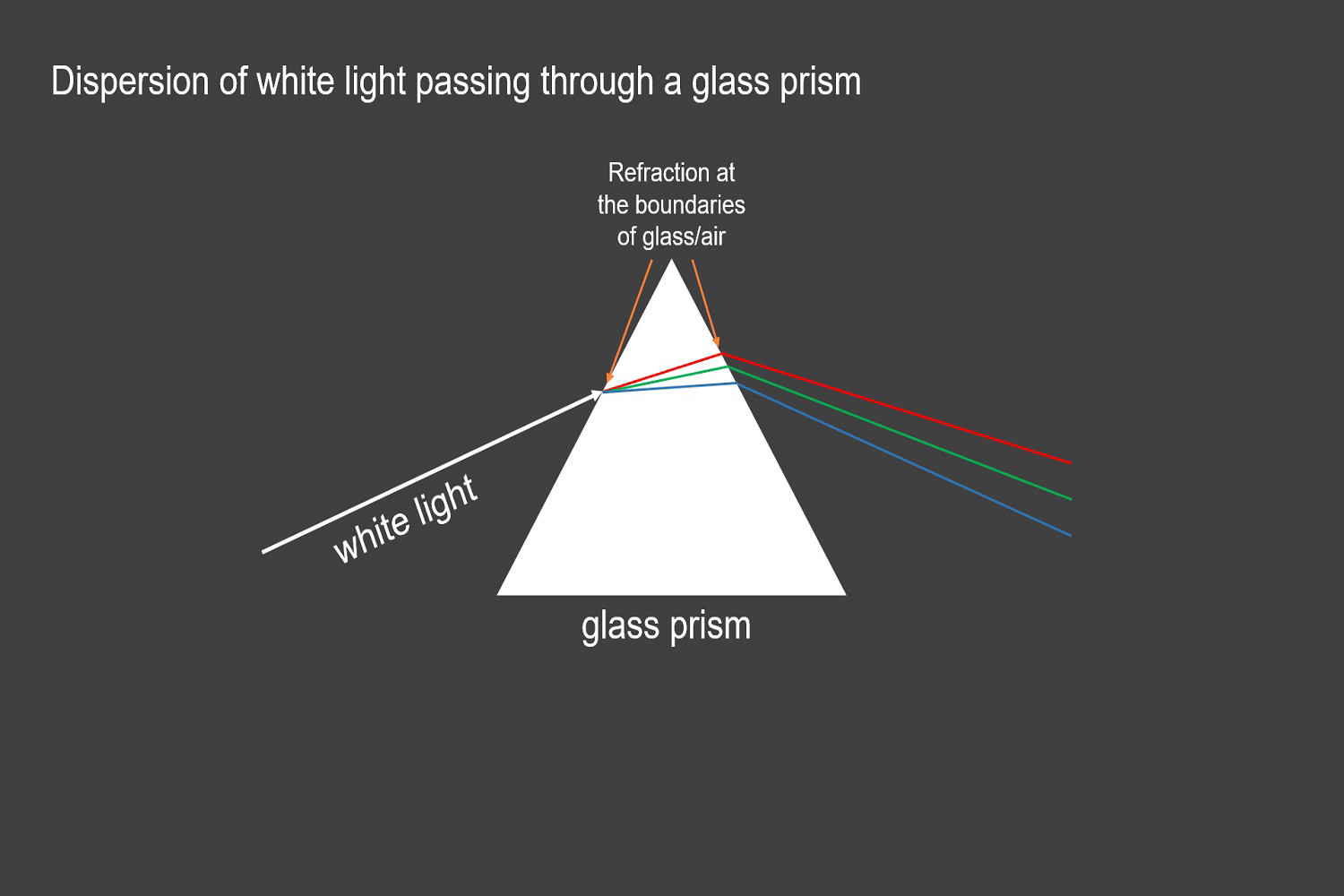
Image 1: Light passing through a prism and being bent as it enters and again as it exits. The blue ray of light is refracted stronger compared to the green and red.
mage 1 depicts the blue ray of light refracting stronger than that of the green and red. The refraction intensity depends on the wavelength and the optical density of the prism through which the light passes. Shorter wavelengths (blue) will bend more than longer wavelengths (red), and material with a higher optical density will bend more than a lower optical density. An index of refraction describes optical densities.
A few examples of optical densities:
Vacuum – 1.000
Air – 1.0003
Water – 1.3333
Crown Glass – 1.52
Dense Flint Glass – 1.66
Diamond – 2.417
Light passing through a lens is no different than light passing through any of the materials listed above. The focal length of a lens is dependent on the refractive index as different wavelengths will be focused on different positions as they pass through the lens into the sensor.
Ideally, a lens would offset the wavelengths' various dispersions by focusing them on the same point. This lens, however, does not technically exist as a single lens, and as a result, lens dispersion causes chromatic aberration. In other words, multiple colors of light will travel at different speeds while passing through a lens. This dispersion often leads to images with colored edges (red, yellow, green, blue, magenta, etc.), especially around objects in high contrast situations.
To compensate for the dispersion, optical systems consist of multiple convex and concave lenses and are made from different glass types with varying dispersion levels. Lenses that correct dispersion for two wavelengths are called achromatic lenses. Lenses with three corrected wavelengths are called apochromatic lenses.
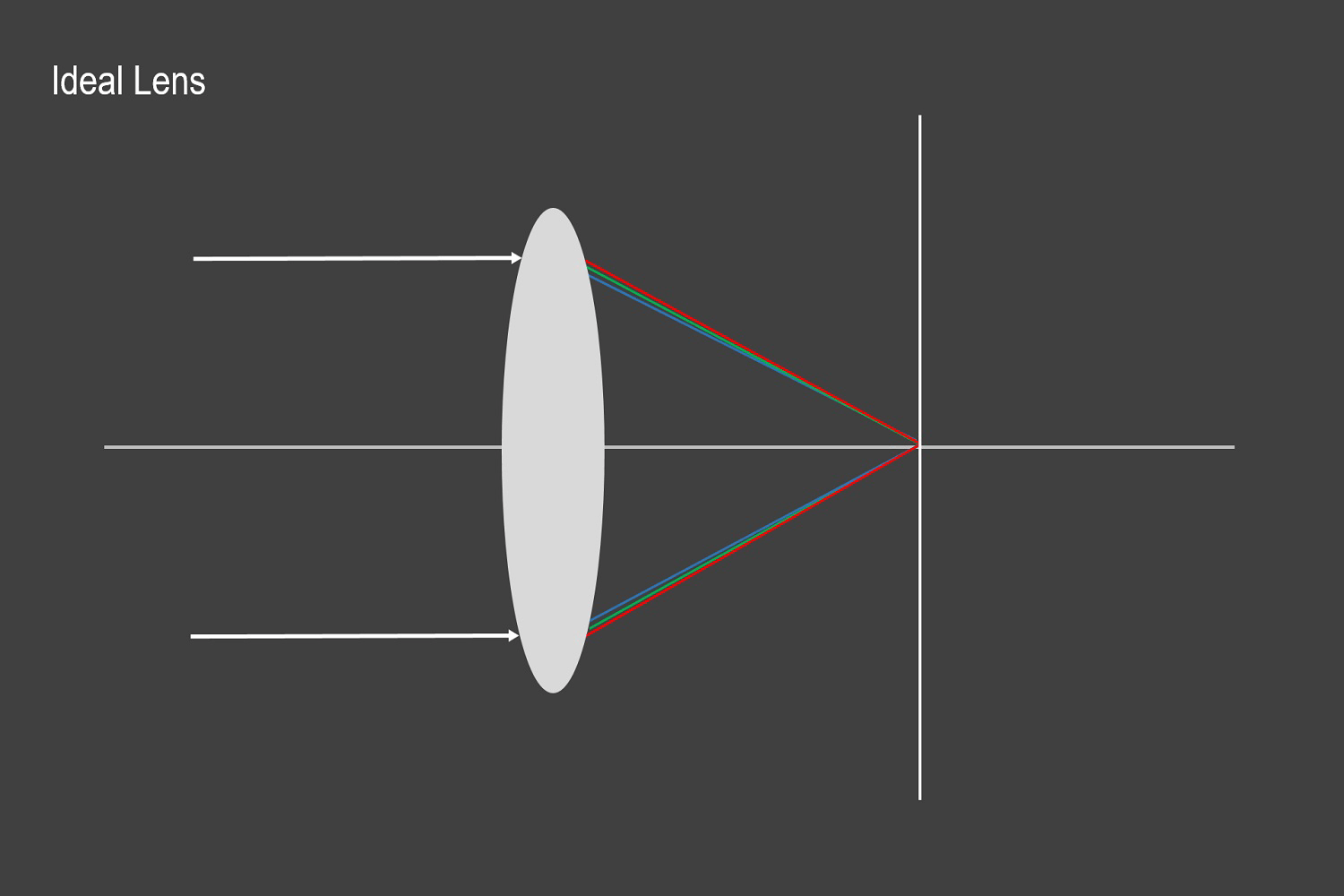
Image 2: A non-existing ideal single lens that points the wavelengths to the same point within the sensor.
Types of chromatic aberration
There are mainly two different chromatic aberration types, longitudinal (axial) and lateral (transverse).
Longitudinal (axial) chromatic aberration
Longitudinal chromatic aberration occurs when different wavelengths disperse from the lens at various points along the horizontal optical axis (image 3). Wavelengths scattered across the axis are known as the circle of confusion, leading to unintentional color fringes even in the center of the image. One of the main strategies for reducing longitudinal chromatic aberration is stopping down the aperture as the aperture is responsible for the incoming light quantity.
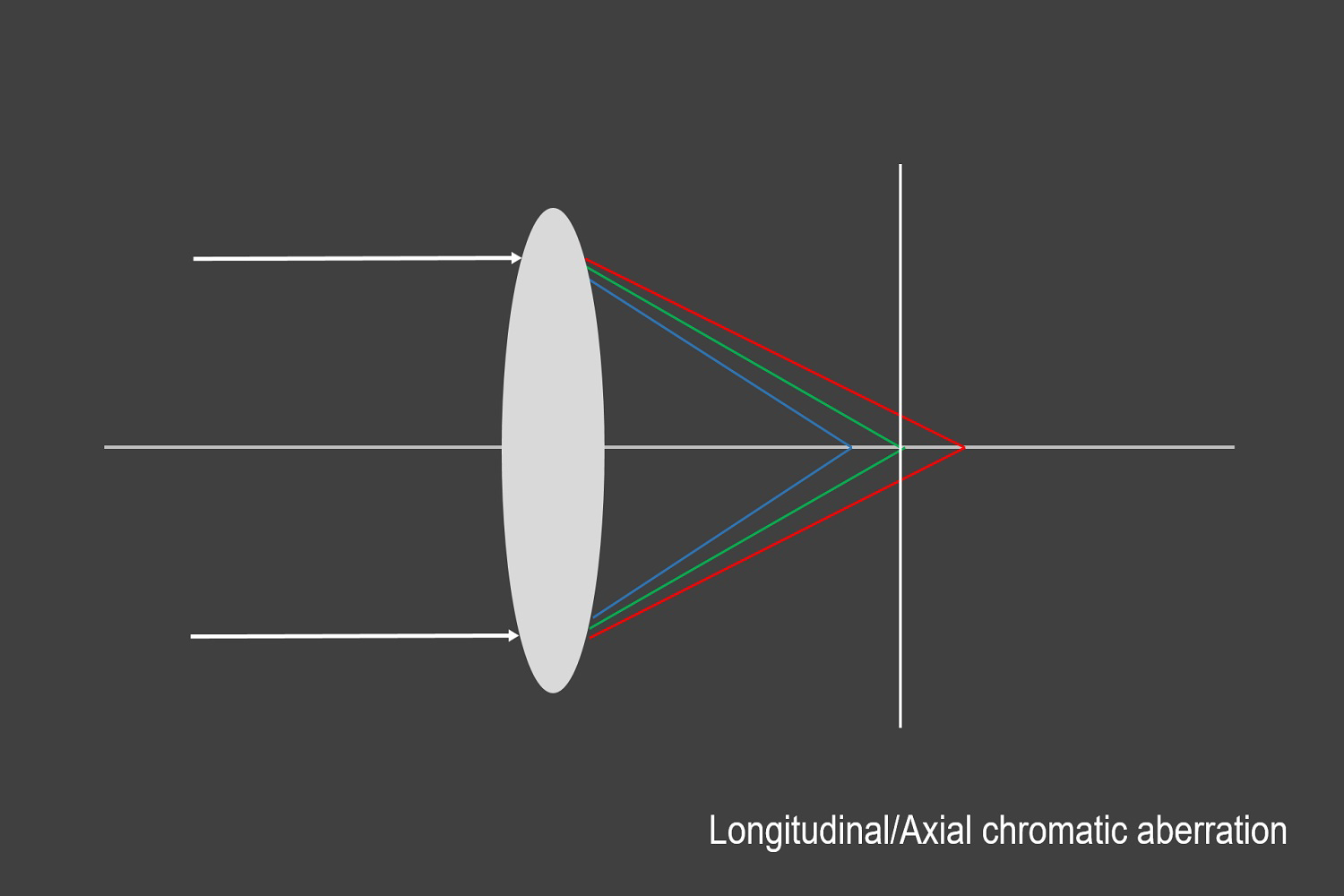
Image 3: The green light is focused sharply on the image plane, while the red and blue are not focused sharply on the image plane.
Lateral (transverse) chromatic aberration
Lateral chromatic aberration occurs when different wavelengths enter the lens at an angle and then focus at various positions along the same focal plane. Compared to longitudinal chromatic aberration, lateral only develops towards the corners and gets visible at high contrast image structures. It cannot be fixed by stopping down the aperture. Lateral chromatic aberration can only be amended in post-processing software.
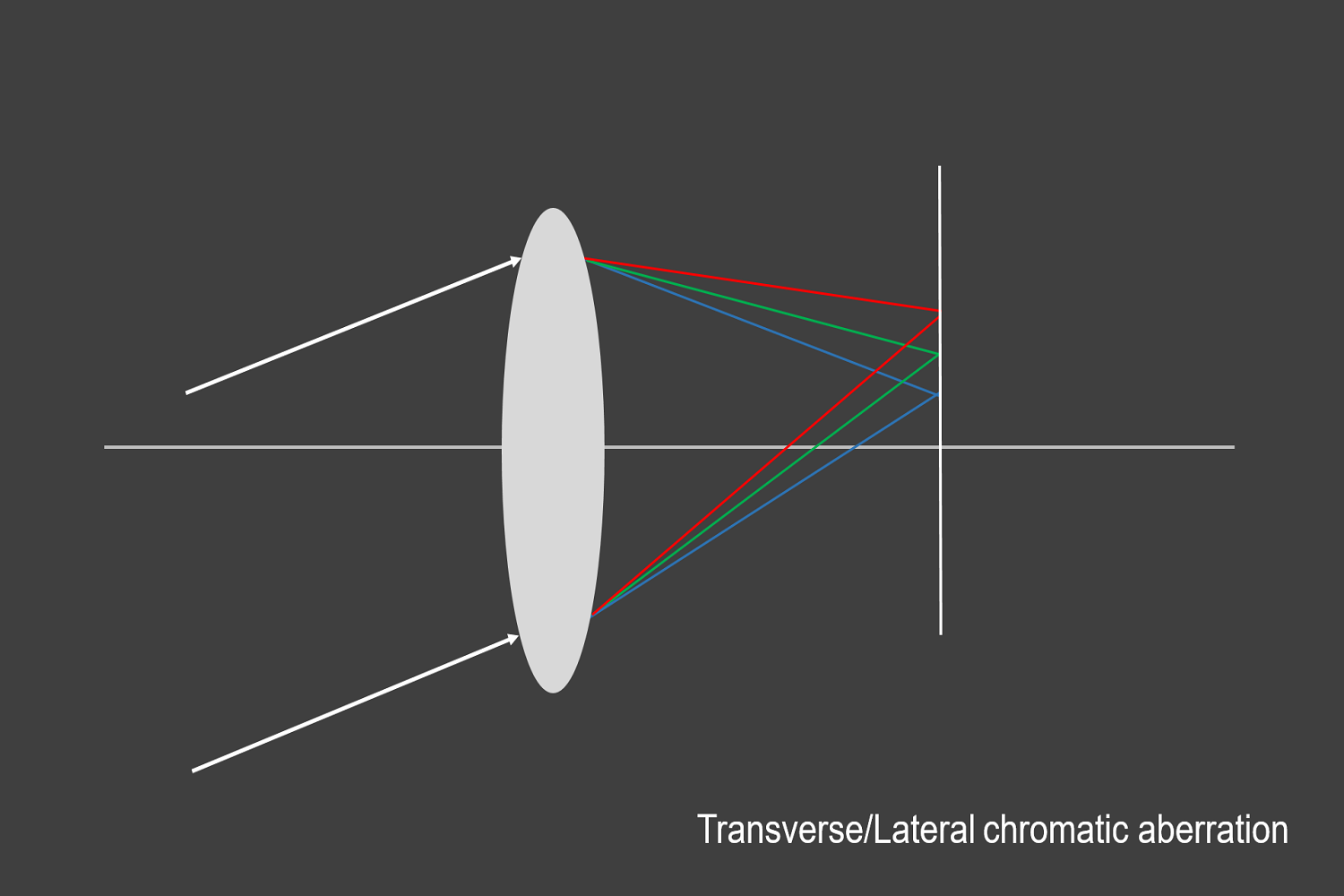
Image 4: Angled wavelengths focusing at different positions along the same focal plane.
Correcting chromatic aberration
Even though chromatic aberration is difficult to correct and often impossible to eliminate entirely, many lens solutions can lead to higher quality corrections.
Achromatic lens
An achromatic correction applies to wavelengths at both ends of the visible spectrum (red and blue). An achromatic lens contains, for example, an element of convex crown glass (lower on the refraction index) and an element of concave flint glass (higher on the refraction index). This combination creates what is known as an “achromatic doublet,” which can reduce the effects of chromatic aberration. In complex optical systems, these elements are often combined with extra-low dispersion glass (ED glass).
Apochromatic lens
Apochromatic correction is designed to bring three wavelengths (ordinarily red, green, and blue) into focus on the same plane. Three types of glass elements, such as flint, crown, quartz, etc., are combined to create the "apochromatic triplet." Unfortunately, combining three elements can be highly expensive and lead to other lens issues during production. As with achromats, a combination with ED glass can also be used for a more complex system.
Primary and secondary spectrum chromatic aberration
A lens without any correction is known as a chromatic lens and will show a primary spectrum chromatic aberration. In other words, the far ends of the spectrum, i.e., the red and blue wavelengths, will focus differently.
When using an achromatic lens design, the red and blue spectrum will focus at the same spot on the horizontal axis, but the green wavelength will continue to focus on a different point. This issue is known as secondary spectrum chromatic aberration and will portray magenta and green artifacts in the image instead of red and blue artifacts.
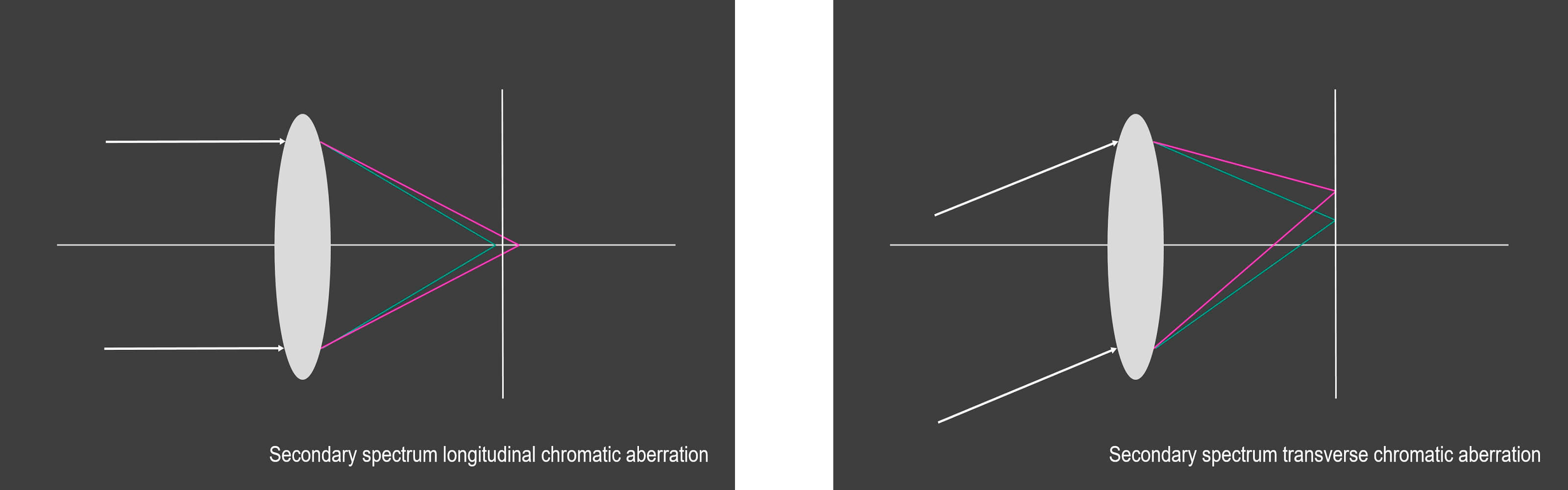
Image 5: Illustrations of secondary spectrum longitudinal (left) and secondary spectrum lateral (right) chromatic aberration.
Both longitudinal and lateral produce secondary spectrum chromatic aberration. Photographers mostly encounter lateral secondary chromatic aberration in their images. As a result, magenta and green colors will appear along the borders of high contrast details, especially towards the image's corner.
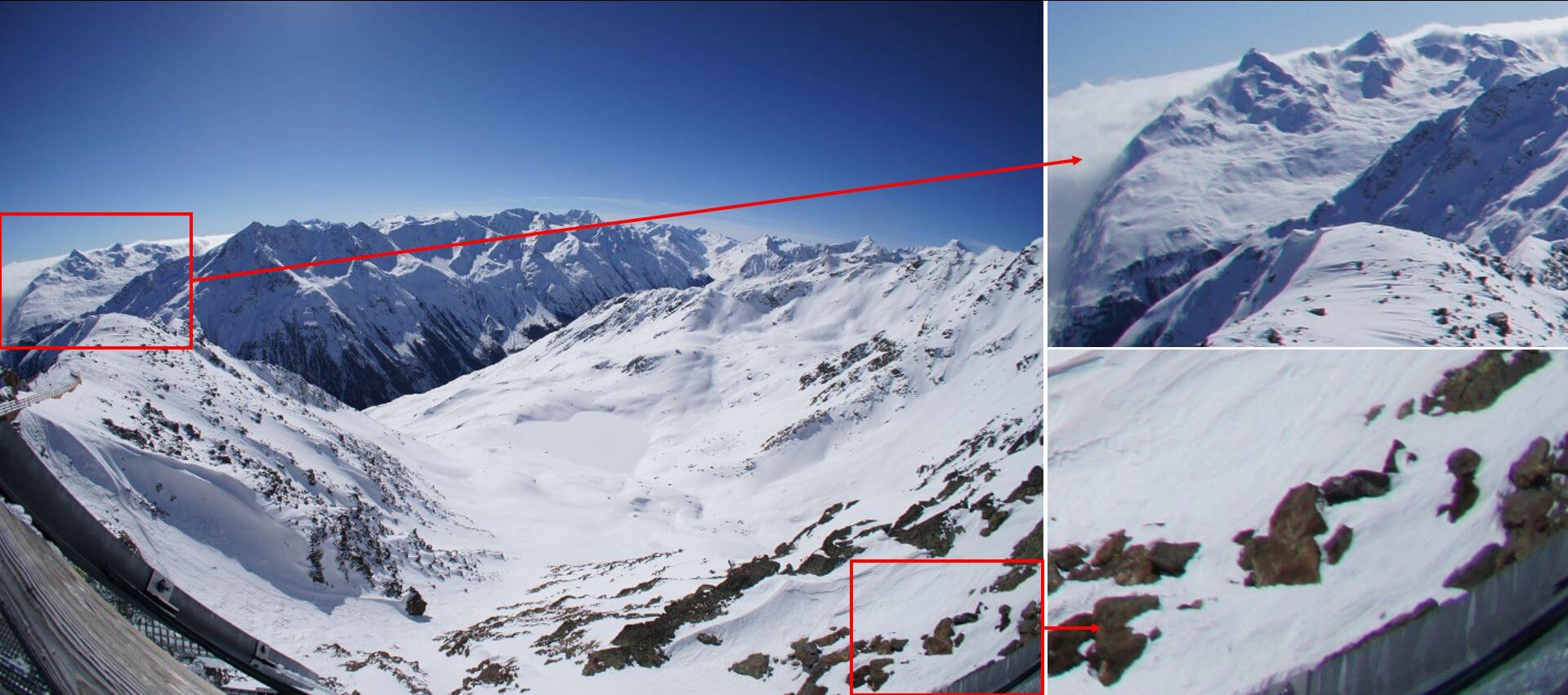
Image 6: Angled wavelengths focusing at different positions along the same focal plane.
Conclusion
The dispersion of light causes chromatic aberration. Dispersion is the separation of visible light into its different wavelengths. When this phenomenon occurs, color fringes will appear along the image's border in either very light or dark parts of the image. These colors often have a damaging effect on the overall image quality of the camera.
Chromatic aberration is often impossible to fully eradicate from a lens, but it is possible to keep it at a minimum. To keep it low, we recommend testing various lens solutions (e.g., achromatic or apochromatic lenses) and then implementing the best solution for your camera system.
需要色差测试方面的帮助吗?
寻找适合测试相机系统色差性能的产品和服务。