
异常的 SFR 和 MTF 结果

    异常的 SFR 和 MTF 结果

    技术笔记

    LED 光源的光度测量

    ... 或者结果中的“!”表示什么?

    我们反复强调的一个重要信息是“pixel count 不是 Resolution”。我们将 Resolution 视为成像系统再现空间频率的能力。能够转换为图像内容的频率越高,Resolution 就越高。

    被测设备的完整行为由 spatial frequency response (SFR) 或 modulation transfer function (MTF) 描述。为了便于比较,这些功能通常被简化为单个数值。例如,这可以是 MTF50 值,它是导致 50% 调制传递的频率。MTF50 值与图像的主观“Sharpness”更相关,而镜头和系统性能在 MTF10 值中表现得更好,MTF10 值也称为“limiting resolution”。

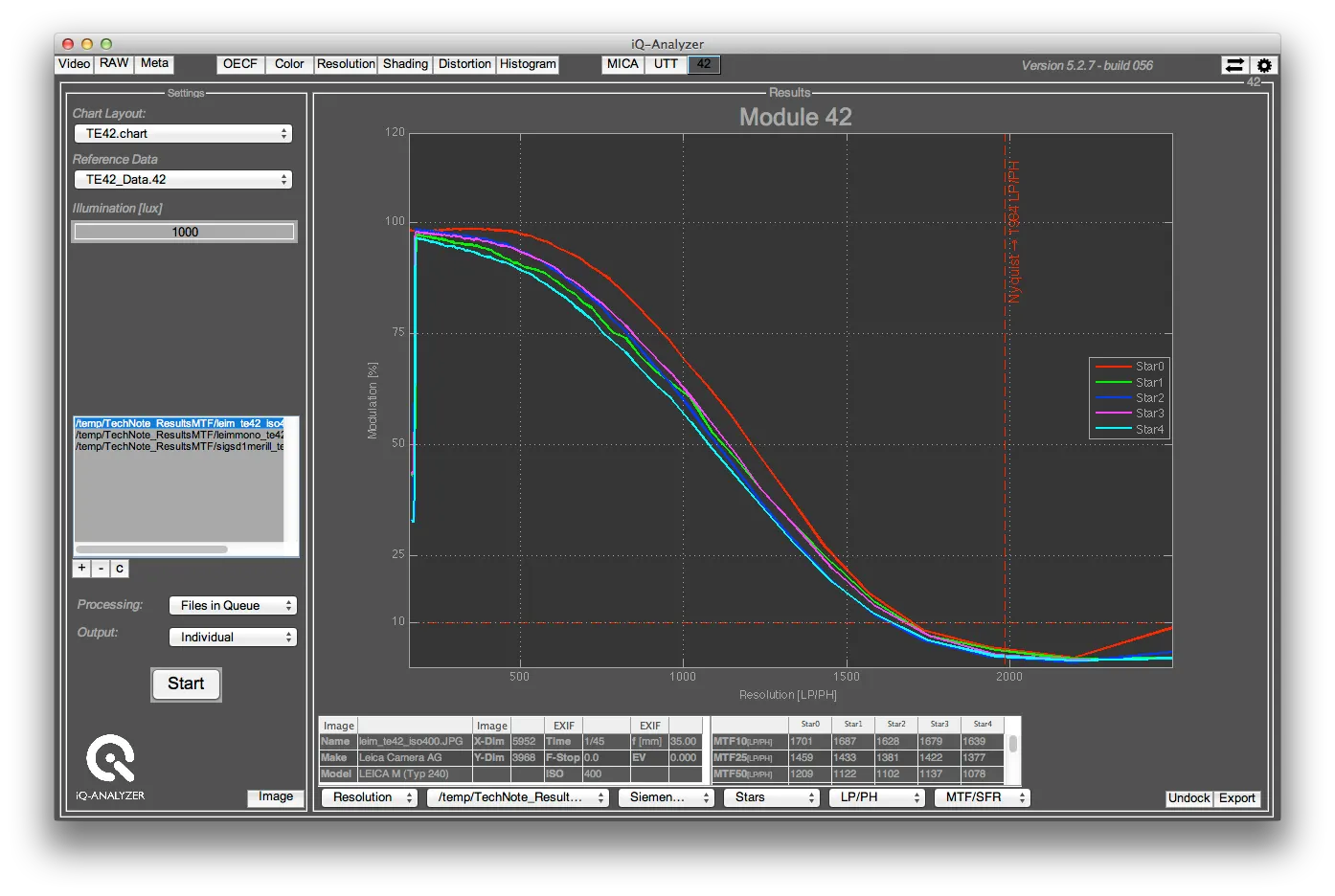
    The MTF plot for the Leica M. The limiting resolution and the MTF50 value can be calculated.
    The MTF plot for the Leica M. The limiting resolution and the MTF50 value can be calculated.

    因此,要获得像 MTF50 或 MTF10 这样的数值,首先计算 MTF,然后从中得出这些数值。现在,我们在 iQ-Analyzer 中面临一个自动化和批量测试中的重要问题。如果无法得出这些数值,我们应该报告什么?

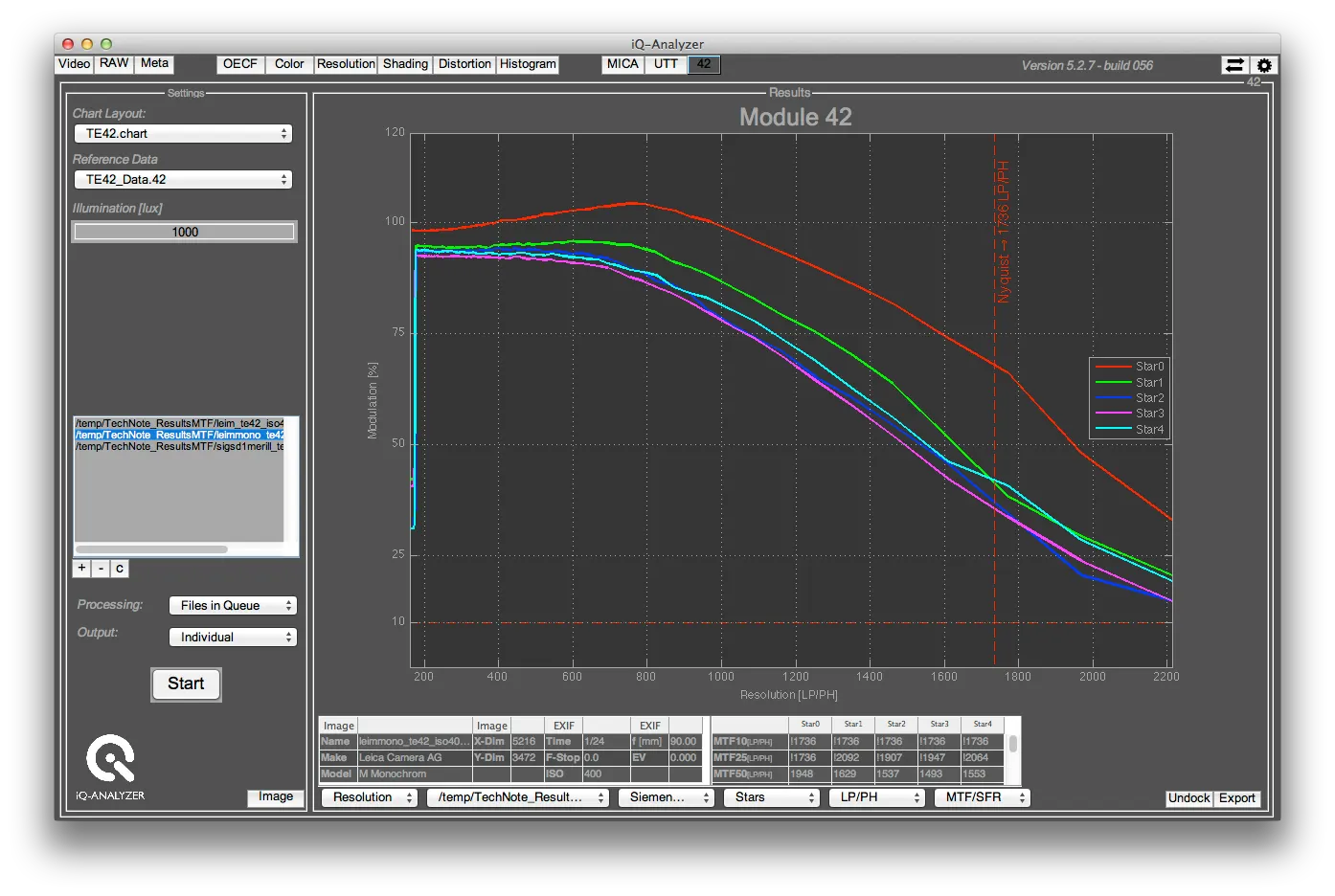
    The Leica M Monochrome has no Bayer pattern, which results in a higher modulation transfer for all frequencies. A MTF10 value can not be calculated below the aliasing region. The results are marked with a "!"
    The Leica M Monochrome has no Bayer pattern, which results in a higher modulation transfer for all frequencies. A MTF10 value can not be calculated below the aliasing region. The results are marked with a "!"

    许多工程师在实验室中使用 iQ-Analyzer 进行批量测试,因此他们可以在短时间内测试大量 Camera 或镜头,而无需用户交互。因此,在软件中弹出一个对话框并询问用户如何操作是不可行的。

    我们决定采用以下方法:

    如果 iQ-Analyzer 无法计算 limiting resolution(这是最可能出现此问题的地方),它将使用 Nyquist frequency 代替。例如,对于一个高度为 3000 pixel 的系统,报告的数值等于 1500 LP/PH。但是,如何区分实际测得的 1500 LP/PH 和设定的 1500 LP/PH 值呢?在用户界面中,我们将设定值报告为“!1500LP/PH”。因此,从开头的“!”您可以看出,此值无法测量,并且已设置为理论极限。在存储的结果文件中,该值写为“-1500”,因为这使得后续处理更容易,它可以作为数字读取。

    您有更好的主意吗?请告诉我们!

    此致
    Uwe Artmann