

Industry Overview
It's no secret that many of us began to rely heavily on video conferencing during the first half of 2020. As a result, we saw an explosion in webcam use that has today become an integral part of our society. In December 2020, Zoom reported more than 350 million daily users of their platform and around 3.3 trillion minutes in 2021. While we expect this high usage to drop off as we get further away from the pandemic, it is clear that video conferencing is here to stay.
What quickly became apparent during the growth was a lack of webcams capable of consistently delivering high image quality. The industry lacked international standards, defined metrics, and test setup guidelines to improve image quality testing. However, in 2023, the VCX-Forum published the VCX-Webcam Standard, which defines metrics and test methods for webcam performance testing.
High-performing web camera systems typically do not degrade in low-light or other mixed/changing lighting conditions. They are also capable of handling continuous motion and other challenging scenes (e.g., changing backgrounds).
Many of our engineers have participated directly in the development of the VCX standard, and we have based many of our webcam test equipment and solutions on the guidelines outlined in the standard.
Main Applications
Web camera systems have unique applications that focus on motion, lighting challenges, and human facial recognition and perception.
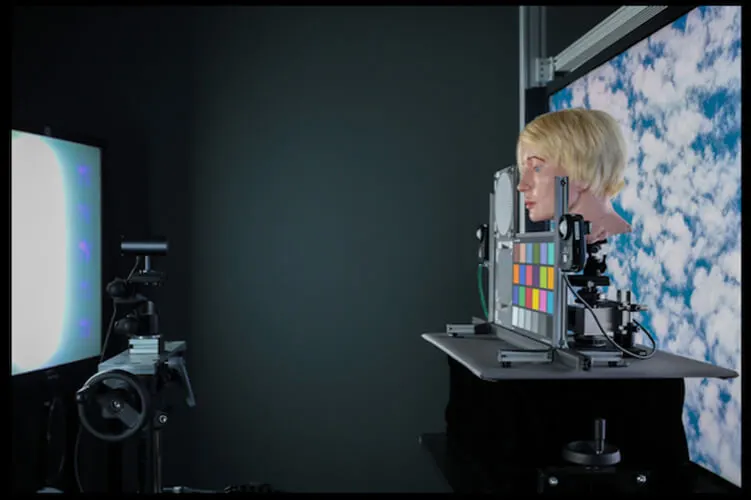
VCX-WebCam Standard
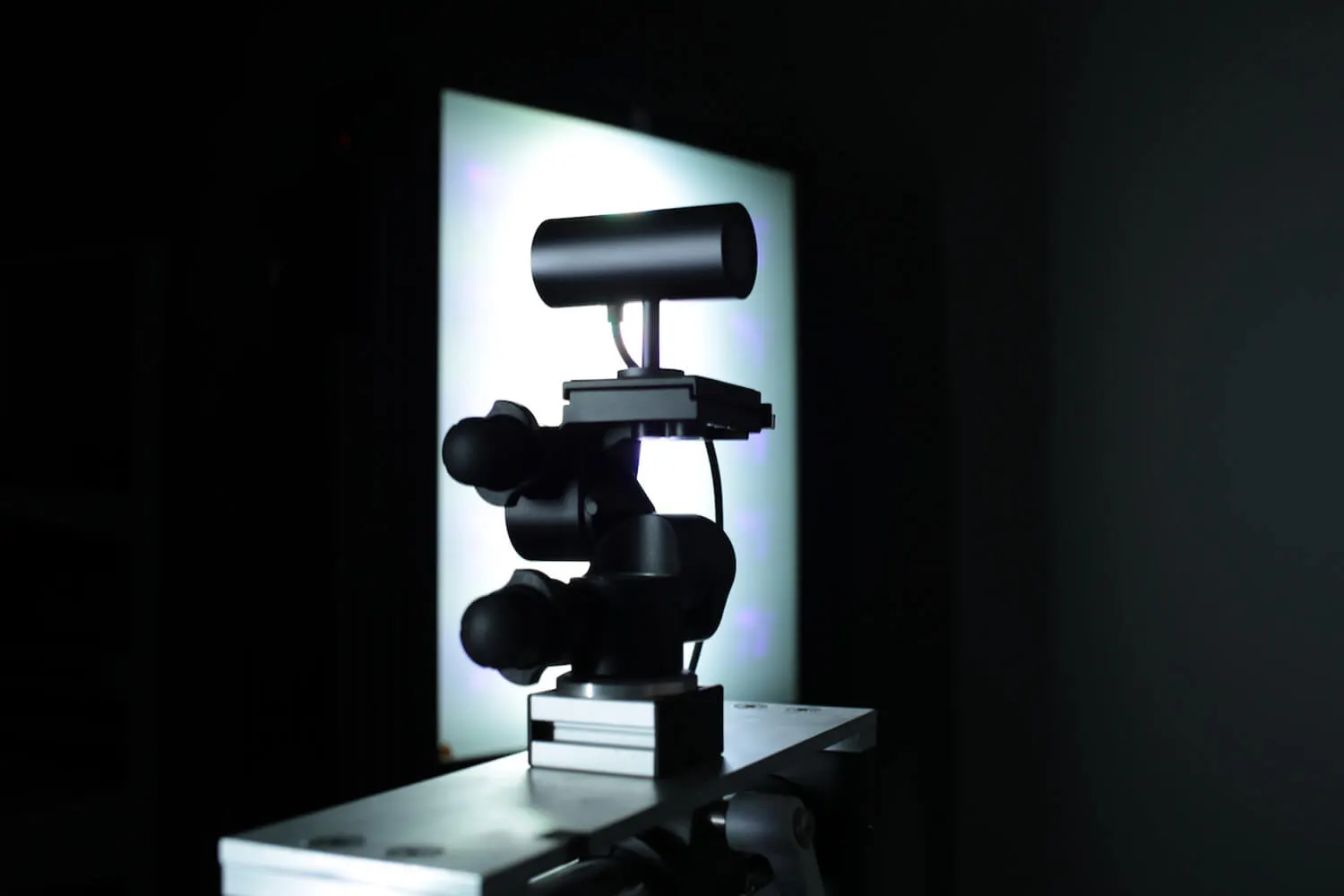
Low-Light Settings
Webcams must perform adequately in changing lighting environments, including low-light scenarios.
Skin Tone Accuracy
Resolution and SFR
People rely on a clear viewing experience when using webcams to ensure correct understanding and participation from all. As a result, it is crucial to test the system's resolution/SFR (spatial frequency response) performance.
VCX International Standard
VCX-WebCam 2023 introduces the first internationally recognized benchmark for video image quality. The VCX-Forum was born out of a desire to have mobile phone cameras independently and objectively scored so that consumers could find the best-quality camera for their needs. Following the success of the mobile phone standard, VCX was approached with the idea of creating a video camera quality standard based on VCX principles.
Before their exponential growth during the pandemic, basic webcam functionality was considered acceptable, and thus, pass/fail tests were adequate for quality control. As growth accelerated, the VCX-Forum began developing a different approach for grading webcam systems.
This test method is based on current devices and performance expectations from the webcam industry and then correlated with objective image quality characteristics.
Key Products
Industry-leading solutions for webcam and video conferencing image quality performance.
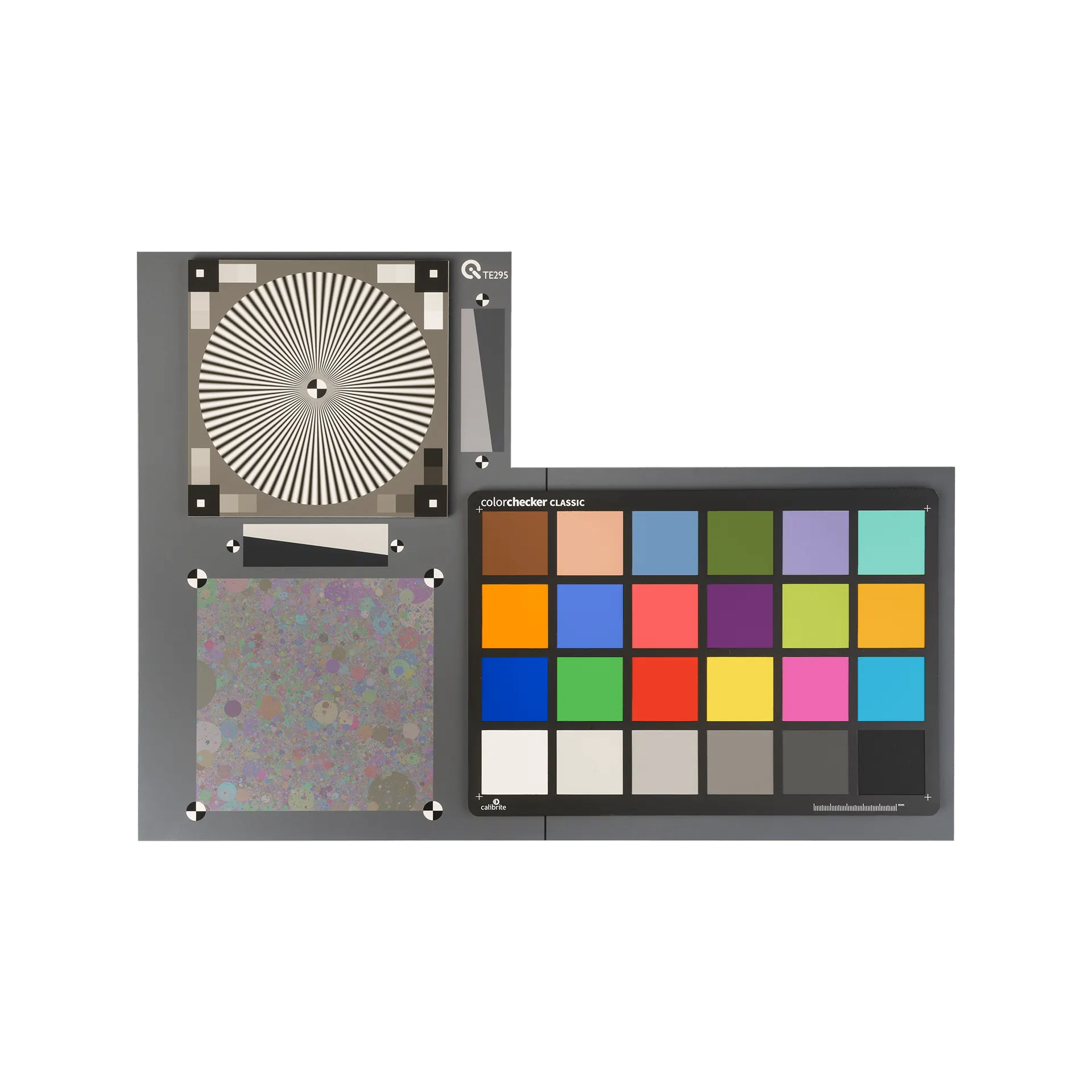
TE295 Webcam Chart
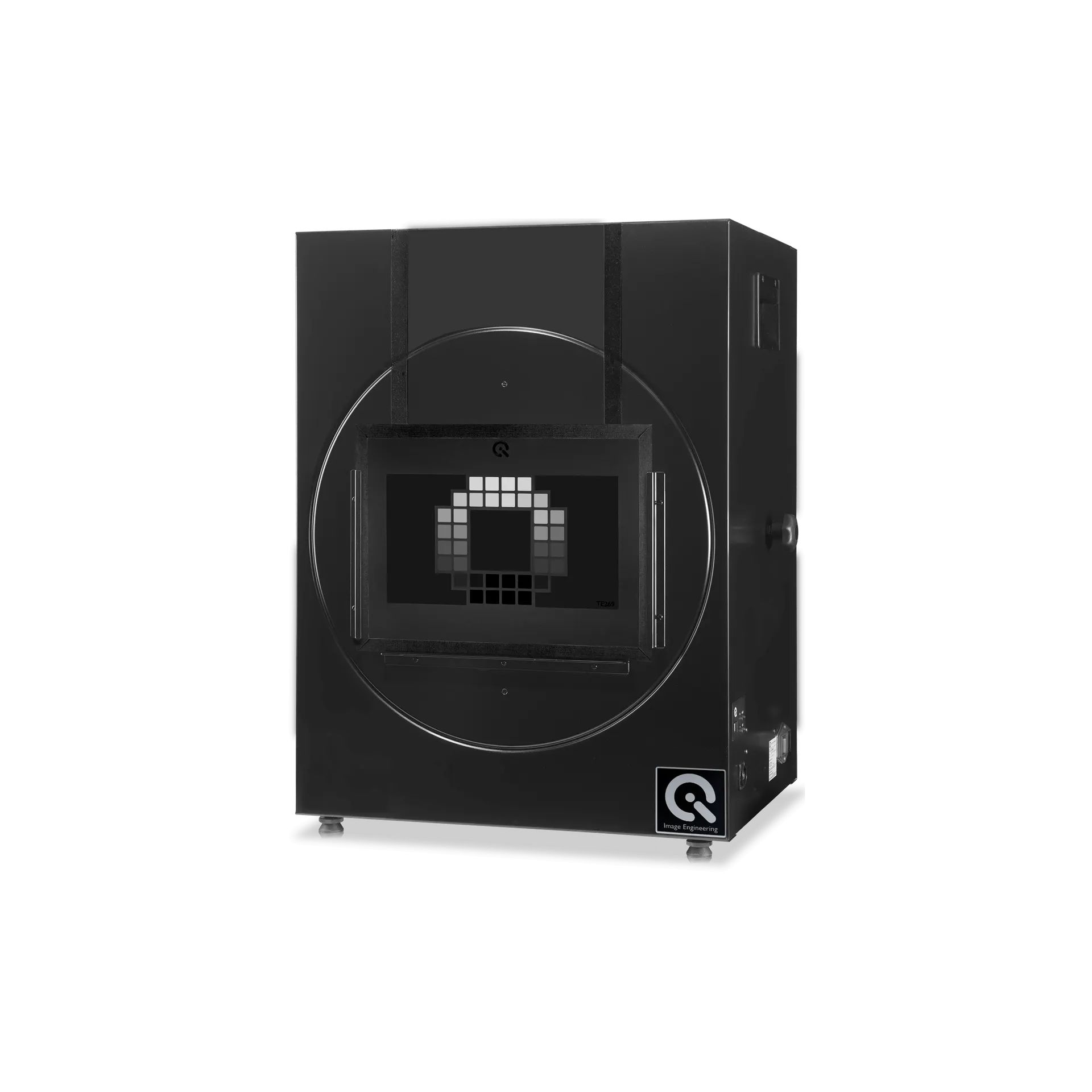
LE7 Lightbox
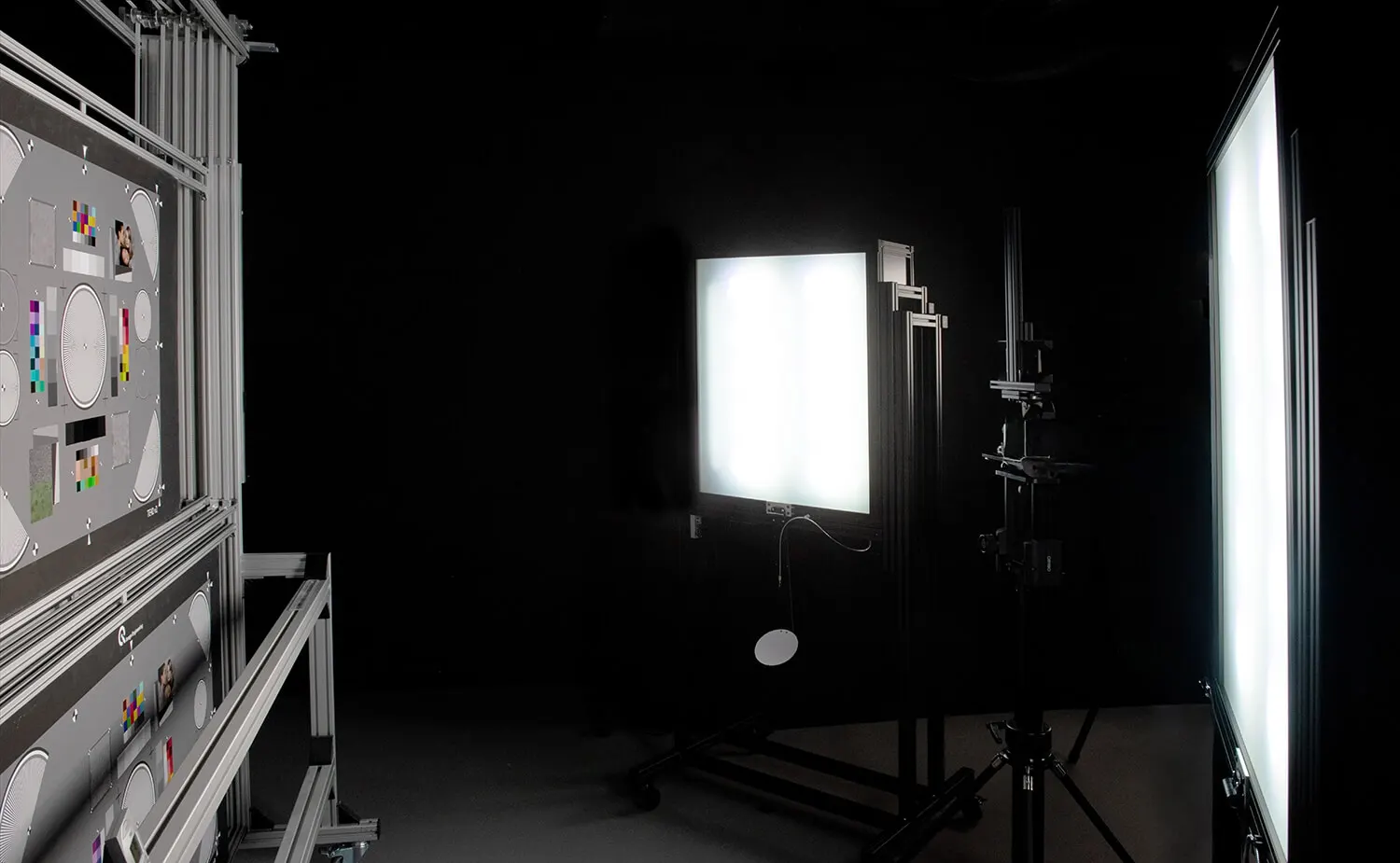
iQ-Flatlights
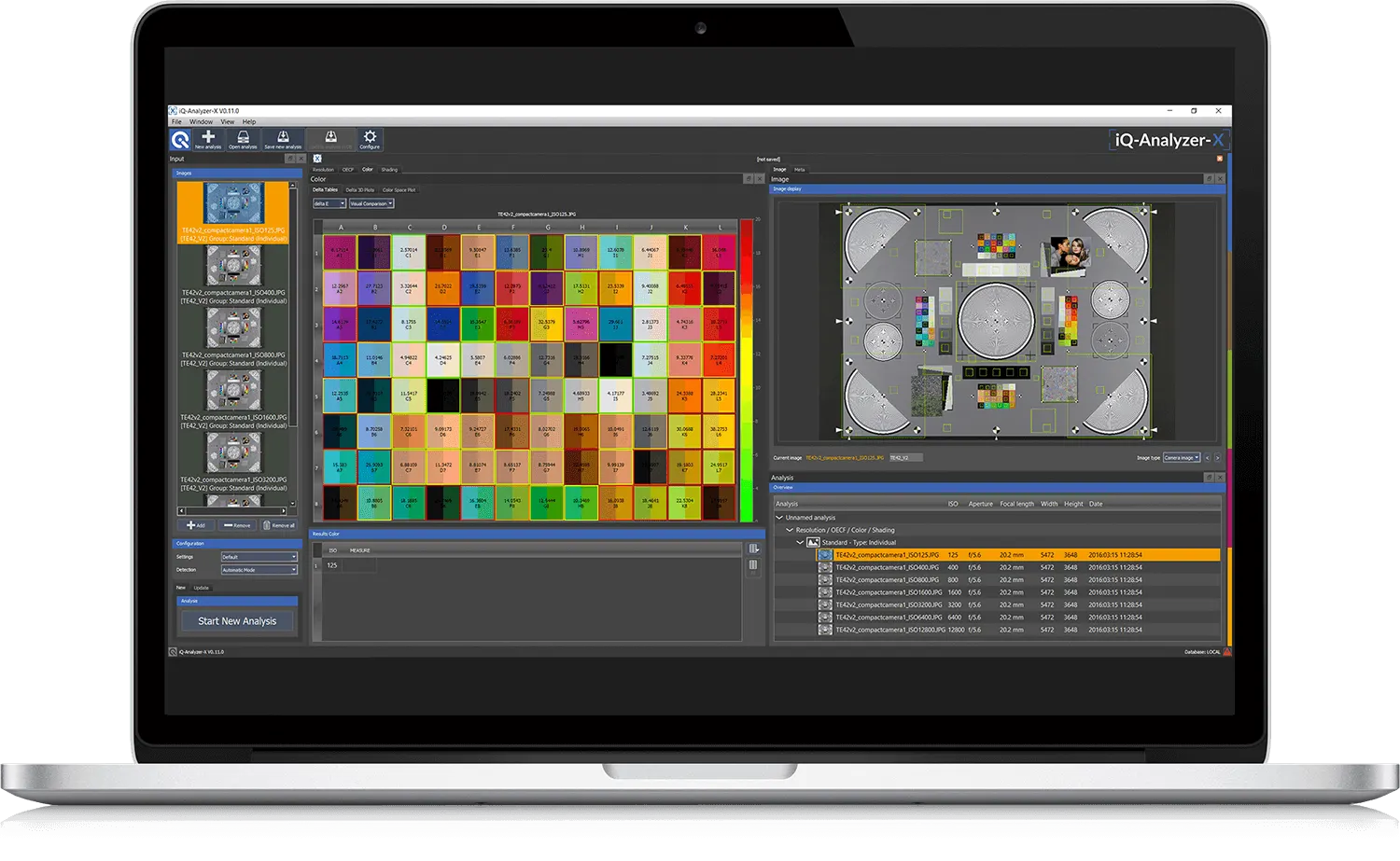
iQ-Analyzer-X
Advanced AI-powered analysis software for evaluating the camera's performance of various image quality factors.
Webcam Test Services
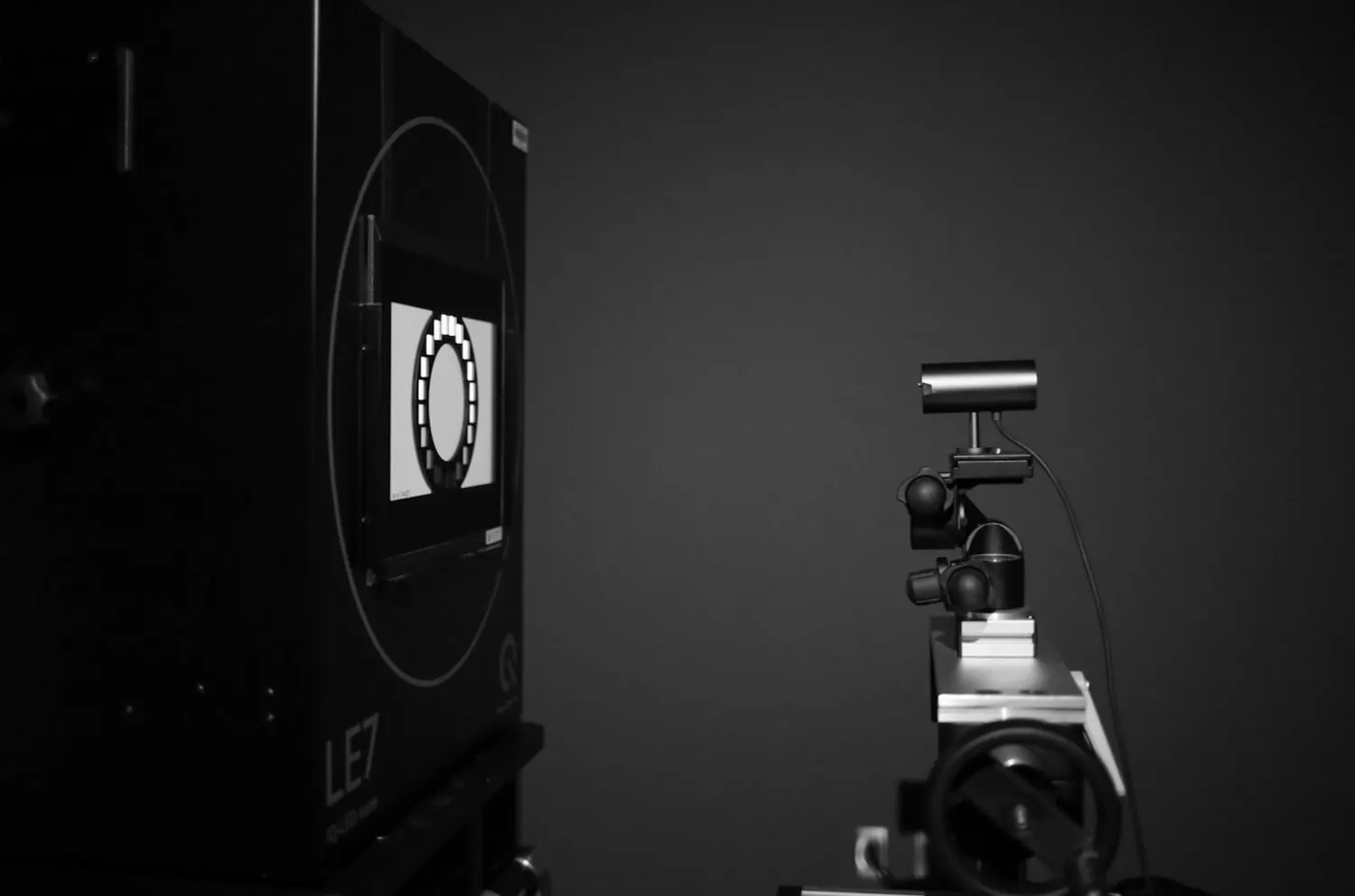
Let us test your cameras!
We house one of the world's largest independent and objective camera test labs. For over twenty years, we have provided objective camera tests to companies looking to improve the image quality performance of their digital cameras.
Our test lab always adheres to the testing methods established by international standards (e.g., ISO, IEEE), including the VCX standard when applicable. Our lab is set up according to the specifications outlined in the VCX white paper, and many on our team actively participated in developing the standard, giving us valuable professional insight into independently testing web cameras.
Example Test Solutions
Test Setup 1: Standard VCX-WebCam
The goal of this test solution is to evaluate the image quality metrics described in the VCX-WebCam international standard for web cam and video conferencing applications. Metrics include dynamic range, resolution, visual noise, sharpening, frame rate, white balance, contrast response, and image uniformity, among others. With all of the equipment listed below, you can set up a full VCX-Webcam test as defined in the standard.
Ideal equipment:
TE295 – Multipurpose test chart
TE270X – OECF test chart
TE255 – Uniform field diffuser
iQ-Headturner – Head movement control
VCX Test Head – A lifelike mannequin head
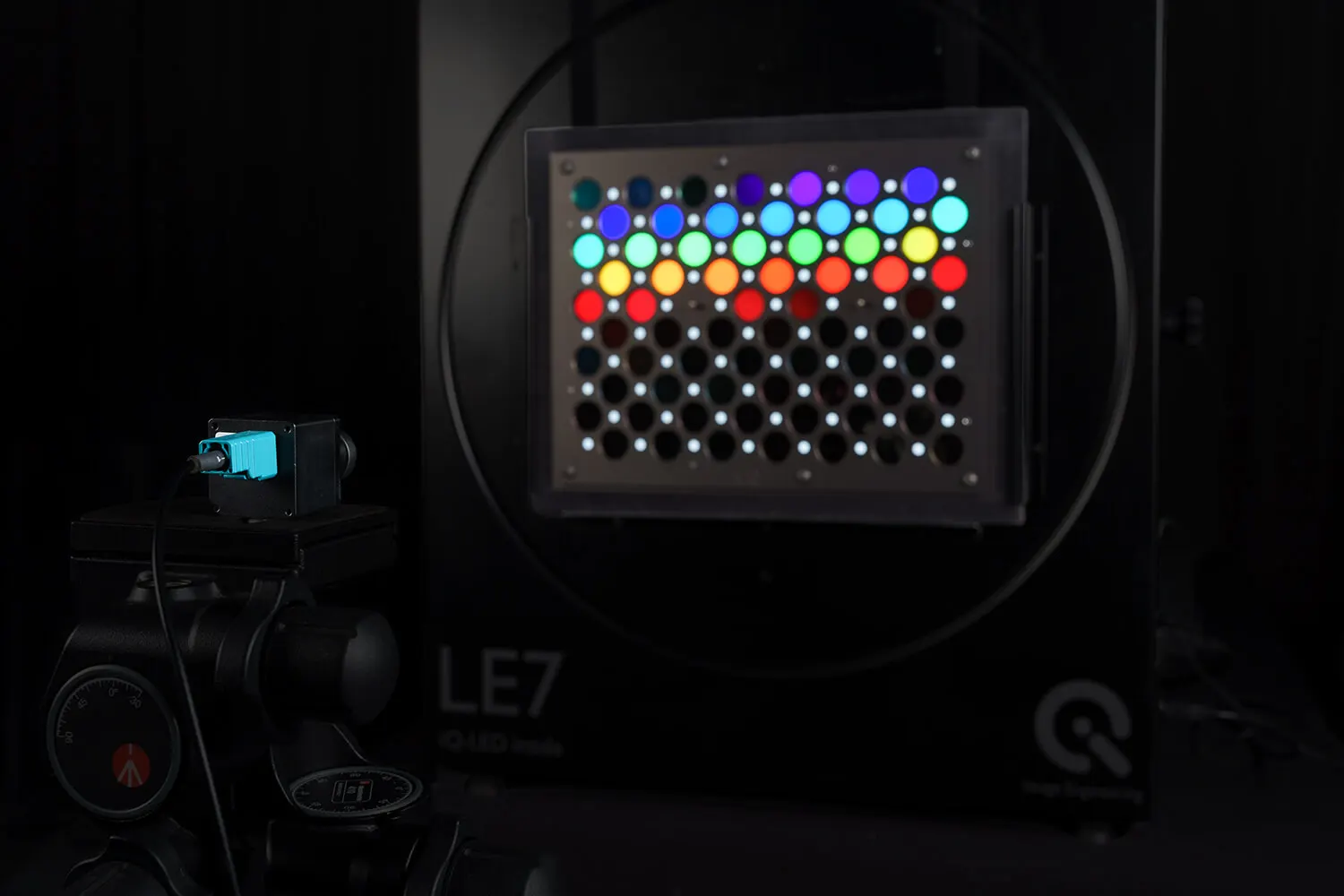
LE7 lightbox – Uniform chart illumination
iQ-Flatlights – Uniform chart illumination
LED-Panel – Timing measurements
iQ-Analyzer-X – Analysis software
This setup is built around the TE295 multipurpose test chart and iQ-Headturner, which uses a VCX Test Head to simulate actual human movements. The iQ-Flatlights are spectrally tunable light sources that provide uniform illumination. For the OECF metrics outlined in the VCX standard, we offer the LE7 lightbox, a spectrally tunable light source, for illuminating transparent test charts such as TE270X and TE255. The LED-Panel lets you evaluate important timing parameters, and the iQ-Analyzer-X can analyze test results.
Test Setup 2: Automated VCX-WebCam
The goal of this test solution is to evaluate the image quality metrics described in the VCX-WebCam international standard for web cam and video conferencing applications. Metrics include dynamic range, resolution, visual noise, sharpening, frame rate, white balance, contrast response, and image uniformity, among others.
Ideal equipment:
All equipment from the Standard VCX-Webcam test solution
Automated equipment from Sofica
This test setup uses all the equipment from the standard VCX-Webcam solution and now incorporates automated solutions from Sofica. As a strategic partner, Sofica provides automated camera test solutions, including robotic camera movement and dynamic alignment, automated chart selectors, and automated control software. Together with our camera test equipment, you can build a full Smart Lab for nearly complete automated webcam tests.
Check out more on our partnership with Sofica.