

Introduction to iQ-LED Technology
iQ-LED is an illumination technology developed and produced by Image Engineering. It allows us to create modern light sources that are unique in their capabilities and the possibilities that they offer.
After more than 8 years of experience optimizing and using this technology, we currently offer the second version of iQ-LED across a wide range of illumination devices. iQ-LED technology has enabled imaging labs to replace their existing tungsten or fluorescent light sources with more flexible, versatile iQ-LED sources.
What is iQ-LED technology?
iQ-LED technology can generate custom spectra by optically mixing the emitted radiation from spectrally distinct LEDs. Physically, iQ-LED is a high-power SMD (surface-mount device)-LED-based spectral broadband light source on a 10 x 10 cm light panel with 41 SMD LEDs arranged into 20 color channels (see figure 1). These channels cover the visible spectrum from 380 nm to 820 nm and are controlled via 4000 steps per channel and 32 kHz PWM (1000 steps with 128 kHz also possible).
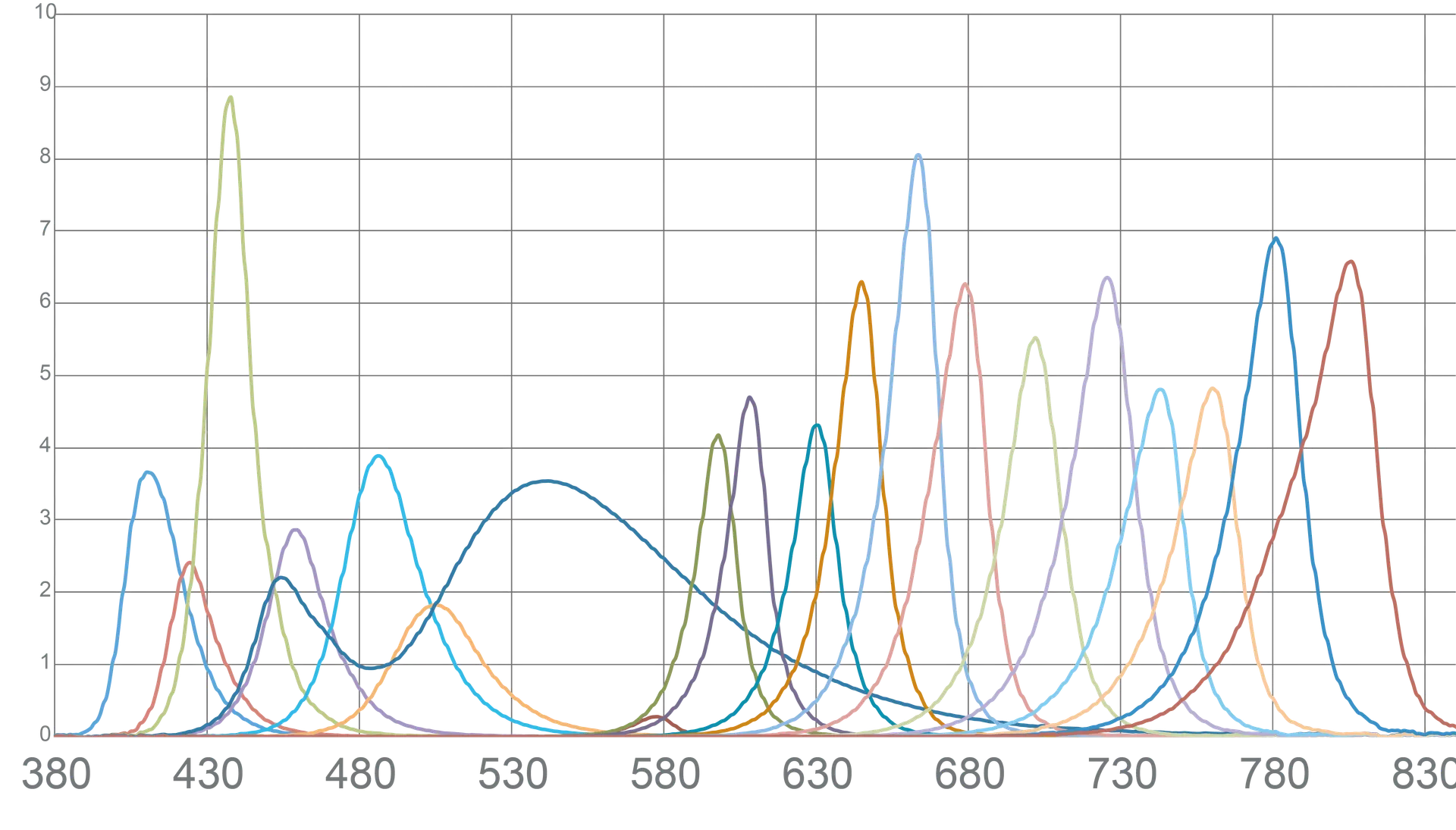
iQ-LED technology can also extend past the visible spectral range and into the IR region. With an IR illumination extension, the spectral range will expand to 380 nm – 1050 nm.
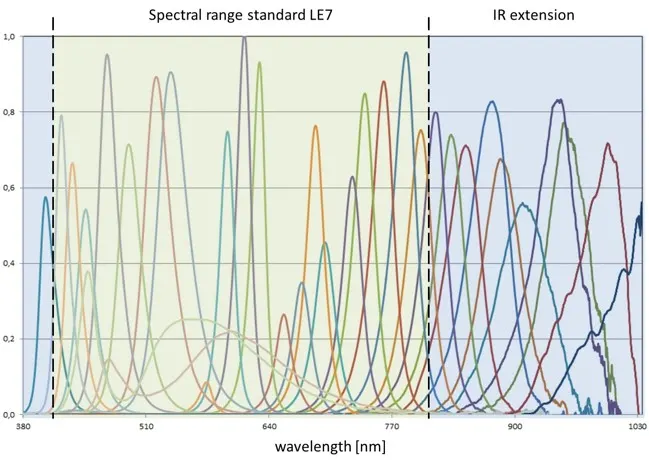
*Graphs are for visualization only; actual wavelengths may vary.
Illumination stability
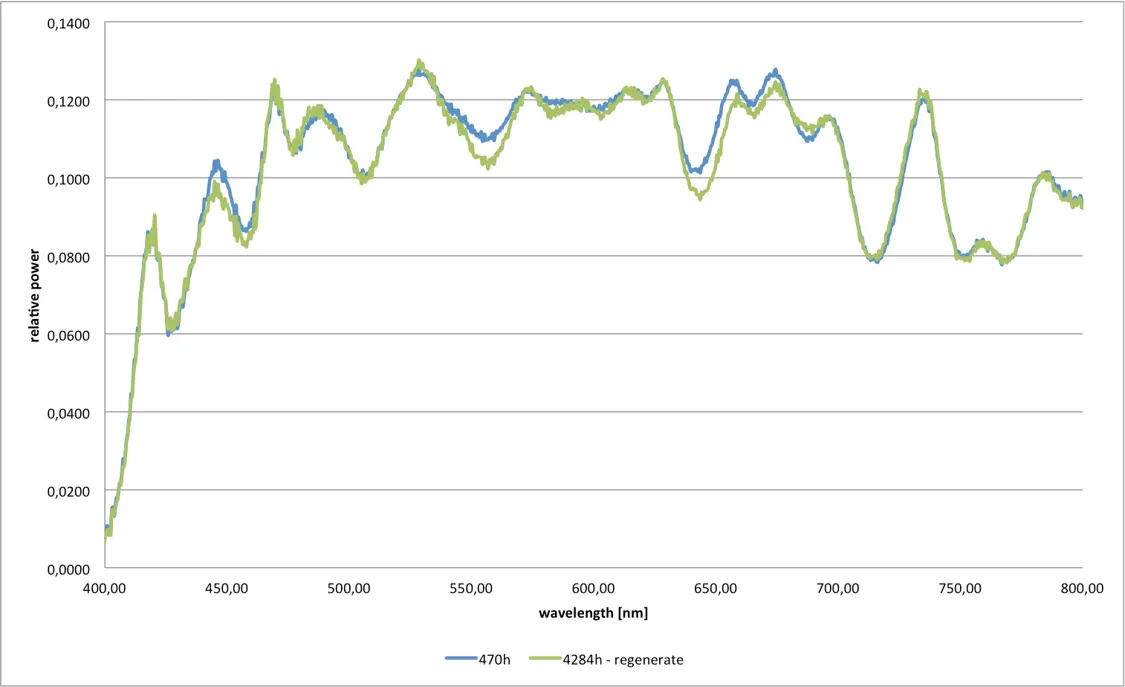
The iQ-LEDs have illumination stability of +/- 1%. They also have excellent long-term stability via temperature control. The device uses a warm-up period and automated stabilizations to ensure the temperature remains within a range that avoids spectral emission variations. The temperature control also provides short-term, mid-term, and spectral stability. Long-term stability is achieved through self-calibration using a calibrated spectrometer included in every iQ-LED product.
iQ-LED vs. standard light sources
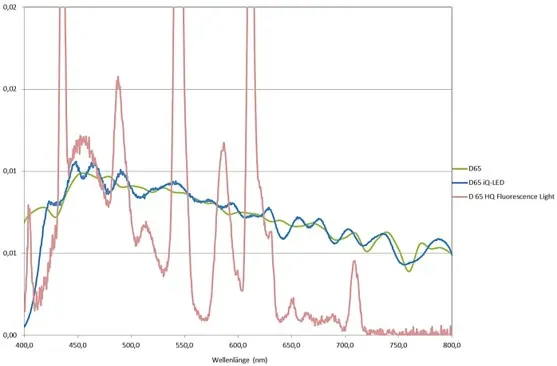
Compared to traditional light sources, such as fluorescent light, iQ-LED can almost perfectly reproduce different spectra. For example, when generating the D65 illuminant, the iQ-LED will closely match the D65 spectrum. However, fluorescent light exhibits sharp changes in wavelength, making D65 reproduction much less accurate (see figure 3).
It’s also worth mentioning that many other light sources, including certain LED-based light sources, do not provide light energy in wavelength ranges above VIS, where the differences in the IR cut filter are critical and cannot be observed when using simple light sources.
Practical use cases for iQ-LED technology
Using a single light source to create a huge variety of standard light sources (e.g., A, D50, D65, etc.)
Creating reference spectra for calibration and characterization on a production line
Replicating natural light sources
Create flickering light test sequences
Want to learn more about how iQ-LED technology can benefit you?
Contact us to set up a training session with our engineers.
Section description text
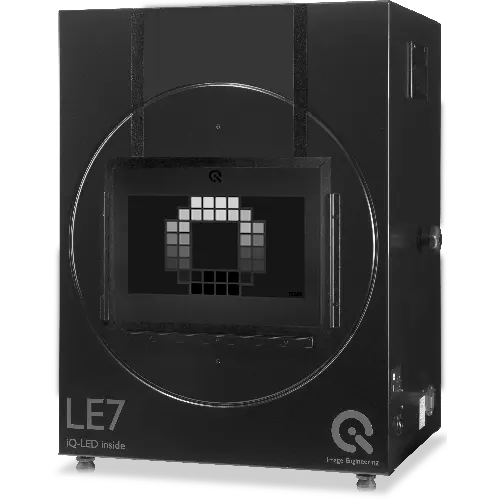
LE7 Lightbox
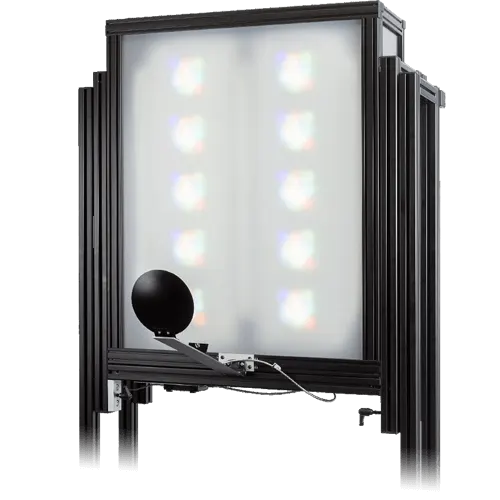
iQ-Flatlight
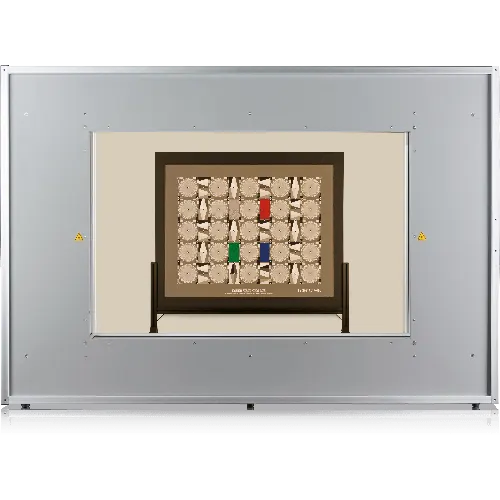
iQ-Chart Box
The iQ-Chart Box has a compact design with eight built-in iQ-LED elements and four fluorescent light sources for illuminating reflective test charts in size A460 and under. Each light is aligned and fixed to ensure test charts are always homogeneously illuminated.
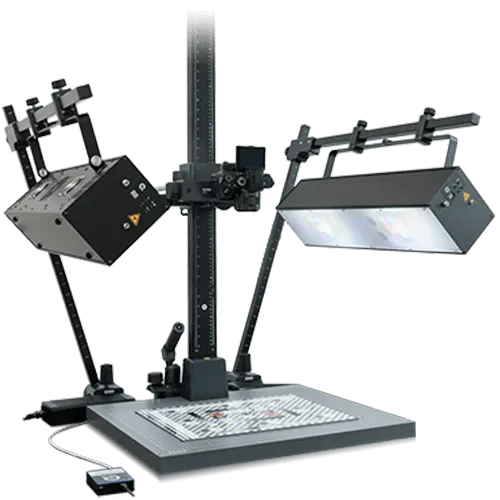
iQ-Multispectral
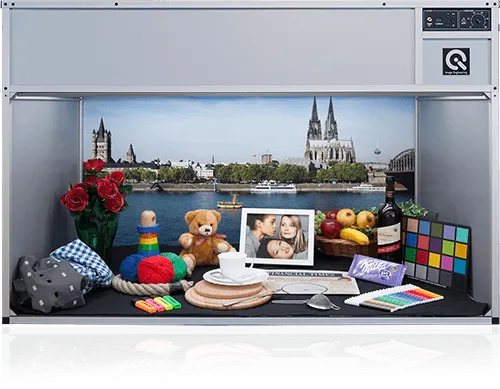
lightSTUDIO-L
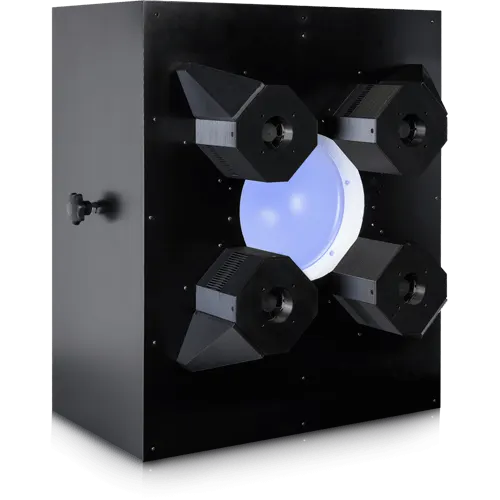
CAL product line
Our CAL products combine iQ-LED with integrating spheres to create flexible calibration and characterization light sources. Please see our production line technology page for an overview of the iQ-LED technology as it relates to the CAL light sources.