

Color Accuracy
Introduction
Color is one of the most crucial factors in image quality, impacting an image's overall perception and accuracy. In digital photography, how cameras capture and process color can significantly affect how viewers perceive the scene. This fact holds for almost any industry, such as professional photographers attempting to accurately depict a scene or autonomous vehicles distinguishing the colors of road signs.
As a result, the color reproduction accuracy of camera systems must be thoroughly assessed and optimized to ensure high image quality performance.


The importance of color in image quality
When color imaging was first developed, it enabled humans to convey a more accurate representation of the world around them. This impact cannot be overstated, as proper color reproduction has become vital for every industry that relies on imaging. Take, for example, medical imaging, where color variations can indicate different disease conditions, or autonomous vehicles that need to interpret the color of painted lines in a construction zone. Without accurate color reproduction, we risk more than just faulty photos in today's technology-driven world.
Several factors contribute to the color performance of an imaging system, including the camera sensor, image processing algorithms, and display technologies. An error in any of these aspects can result in inaccurate color reproduction. With that in mind, it is crucial to understand and evaluate the color reproduction of these camera systems to ensure the highest image quality.
What are the key aspects of color?
Color scientists use various methods to describe the nature of color in imaging systems. These methods help assess the accuracy of a particular system in reproducing color profiles.
ICC Profiles
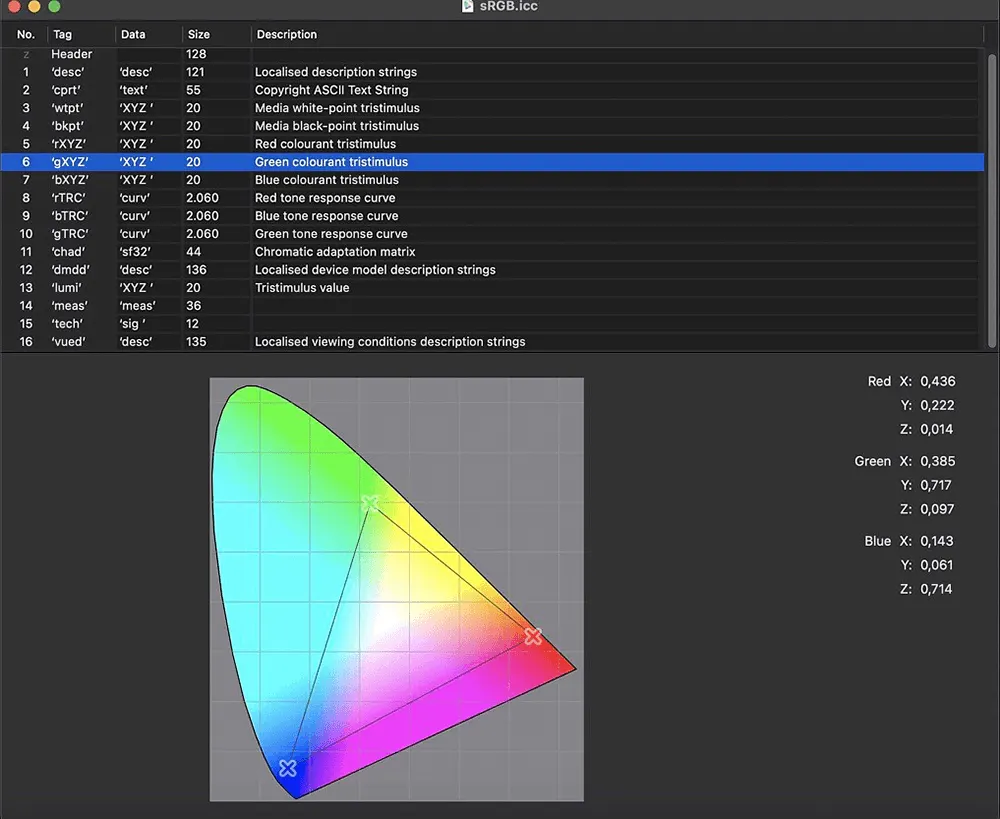
ICC (International Color Consortium) profiles are standardized files describing an imaging device's color characteristics. They are generated at the beginning of the calibration process and used for all subsequent devices undergoing calibration and characterization. In addition, many ICC profiles are widely available and can be downloaded for calibration. ICC profiles are used for both hardware and software color calibration and are crucial for maintaining color accuracy across multiple devices, e.g., cameras, monitors, and printers.
Color Matrices
A color matrix is a mathematical transformation used in image processing to convert raw color data captured by a camera sensor into a standardized color space, such as sRGB. This transformation is necessary because camera sensors capture light differently from the way humans perceive color. The color matrix corrects these differences to reproduce more accurate colors. Determining color matrices is critical for ensuring that the output image closely matches the original scene.
Color Gamut
Color gamut refers to the range of colors a specific imaging system can generate, e.g., a display or a printing system. Different devices often have different color gamuts; to ensure accuracy, all devices should be able to reproduce a comprehensive color range to maintain high image quality. Standard color encodings include sRGB, Adobe RGB, and ProPhoto RGB, each offering different gamuts, meaning different extents of color coverage. A wider gamut allows for more saturated colors but requires proper color calibration and management to ensure consistency across various imaging devices.
RGB vs. CMYK
RGB (Red, Green, Blue) and CMYK (Cyan, Magenta, Yellow, Black) represent different color models used in imaging systems. RGB is an additive color model mostly used in camera systems and displays. It combines various intensities of red, green, and blue light to recreate the scene's colors. CMYK is a subtractive color model used primarily by printers to account for a (typical) white background of the printing paper. It combines cyan, magenta, yellow, and black ink to produce colors on a printout. Understanding the differences between RGB and CMYK is essential for ensuring better color calibration and, ultimately, higher color accuracy across digital and print formats.
White Balance
The white balance function of a digital camera ensures that objects in the image field are captured with colors correlated with the light source. In other words, we want our imaging systems to ensure that the whites and the greys in the images appear neutral without any color cast. White light sources are not uniform and can have different color temperatures (e.g., the sun, which is the same light source but varies with the time of day). Without proper white balance, these images would exhibit an unwanted color cast. Typically, the camera automatically adjusts the white balance depending on the type of light source. Proper white balance is essential for avoiding color inaccuracies, particularly in mixed or complex lighting conditions.

Color calibration background
Color calibration is critical to ensure that an imaging system accurately reproduces colors according to a specified color model (e.g., RGB or CMYK). Calibration aligns the color reproduction of an imaging device with predefined specifications to ensure consistency and accuracy across devices and lighting environments. Images may exhibit false-color shifts due to improper color calibration, resulting in poor image quality.
Color calibration is essential for companies that produce imaging and sensor systems. For example, a photograph edited on one monitor should appear identical when viewed on another. That is true for autonomous driving cameras and sensors. If they do not interpret colors the same way to make appropriate adjustments, we create unsafe driving conditions. We can ensure that colors are reproduced accurately across multiple devices only through proper calibration.
International standards
International guidelines, such as ISO standards, are recommended to ensure consistent image quality measurements across devices and laboratory setups. The ISO 17321-1 standard focuses on color characterization and calibration of digital still cameras by providing test methods to assess how accurately a camera reproduces colors. This is the standard that we closely follow when testing in our iQ-Lab.
Color characterization methods
Obtaining the spectral sensitivities
The most accurate method for color characterization is to obtain the spectral sensitivities of the camera or imaging device. Spectral sensitivities are essential for generating an ICC profile or color correction matrix (CCM), making them the most vital step in camera color characterization and calibration. After correcting the colors, you can determine the remaining color inaccuracies of your camera module, since it is impossible for most cameras to correct all colors to the full extent.
Method 1: Color Test Charts
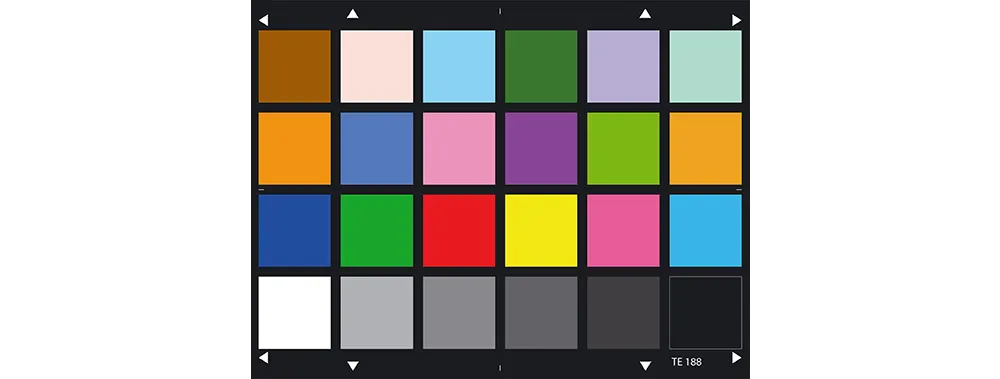
Color test charts, such as the ColorChecker, are commonly used to assess camera color accuracy. These charts contain patches of standardized colors that cover a wide range of the visible spectrum. A color profile or correction matrix can be generated by capturing images of the chart and comparing them with the manufacturer-provided reference values. That way, deviations are minimized.
Method 2: A test chart using narrow-band interference filters
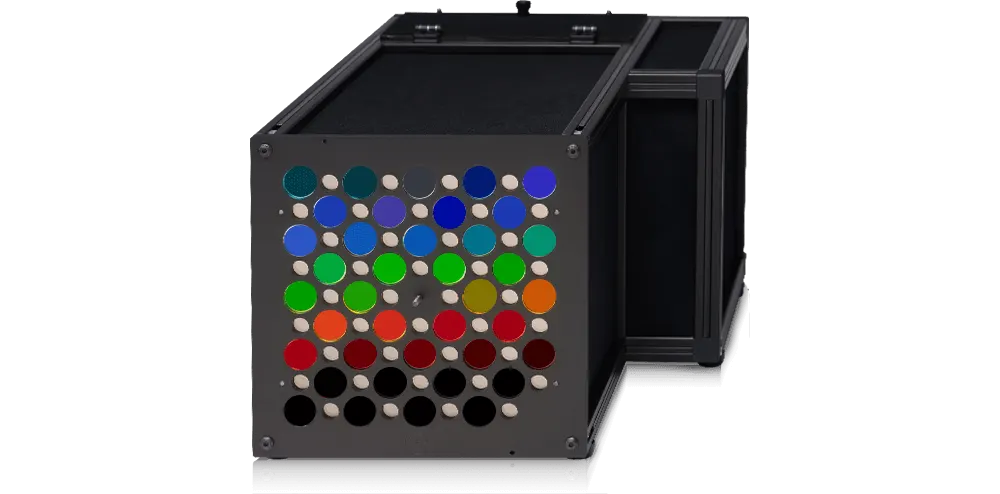
The standard method for obtaining spectral sensitivities is to use a monochromator. However, monochromators are often complex instruments that require expertise to operate correctly. We have developed a test chart using narrow-band interference filters to address this issue. These are better suited to measuring the spectral sensitivities of camera systems and are easier to handle than monochromators. We incorporate this unique "test chart" throughout our camSPECS product line.
Once a single image of the interference filter chart is captured, it can be loaded into the camSPECS software for automated analysis. Once analyzed, the software will show you the spectral sensitivities of your camera. This method provides a basis for improved accuracy in camera color characterization.
Method 3: Using a spectrally tunable light source
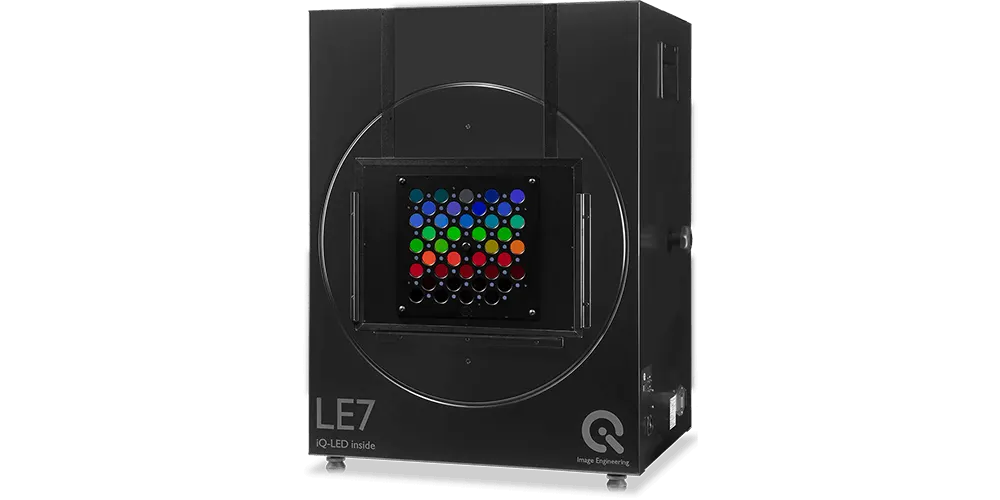
A spectrally tunable light source can generate custom spectra, making it the most versatile method for obtaining spectral sensitivities and generating color profiles. Our iQ-LED devices are spectrally tunable and comprise 41 high-power SMD LEDs distributed across 20 channels. We capture an image of each illuminated channel when using the devices to measure spectral sensitivities.
How we measure color in the iQ-Lab
In our iQ-Lab in Kerpen, we use a combination of the methods described above, depending on the requirements of the device under test. You will need an appropriate laboratory setup optimized for your testing process. See our article on how to build an image quality lab for more details.
We could use a color chart to create a color profile by capturing images of the chart under various lighting conditions. When using this "chart-based" method, we recommend a spectrally tunable light source, such as the iQ-Flatlights, as they can generate all essential spectra required to create a color profile.
When utilizing camSPECS, we capture a single image of the interference filter plate and load it into the camSPECS software to automatically analyze and convert it. Once analyzed, the software will show you the spectral sensitivities of your camera and allow you to create a CCM or an ICC profile.
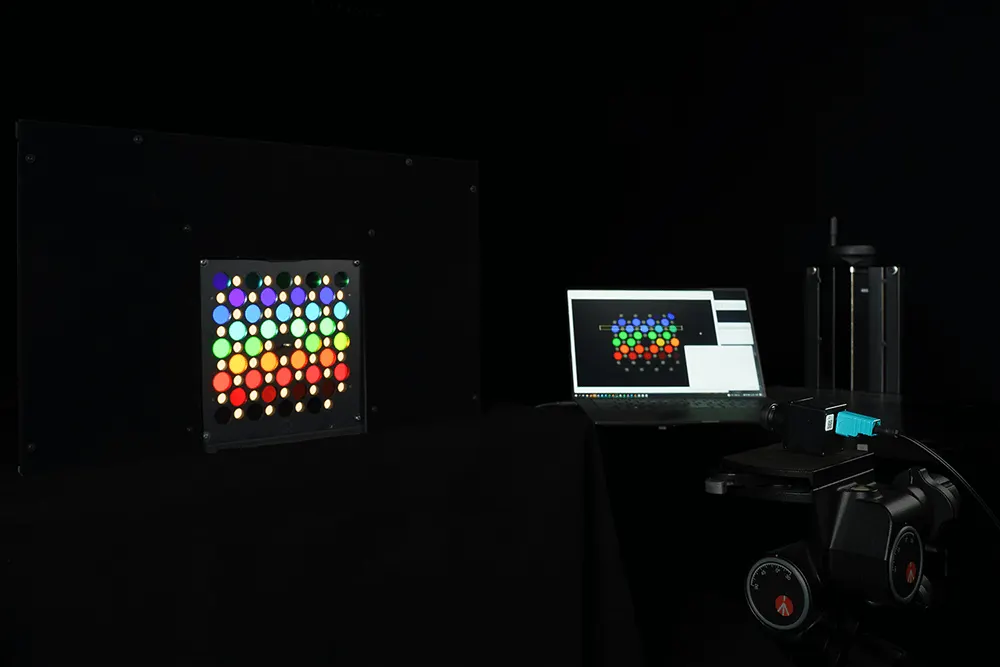
Images captured using an iQ-LED device are also evaluated using the camSPECS software. Due to the limited number of iQ-LED channels, you must use a spectral estimation method to get to the spectral sensitivities. Once complete, you can import all the images into the software. From there, you need to define the spectral distribution of each channel, which can be determined using the iQ-LED software. Then, your spectral sensitivities are automatically calculated, and a CCM can be generated.
Production line color calibration
Many imaging applications produce camera modules on a production line. As a result, methods for calibration on a production line are crucial to improve quality and efficiency. Our iQ-LED devices can be integrated into a production line using an established method to generate CCMs or ICC profiles, enabling simultaneous multiple calibrations. For more information on best practices for production-line color calibration and characterization, please see Eric Walowit's conference paper.
Conclusion
Color is a fundamental factor of image quality, influencing how images are perceived and interpreted. Accurate color reproduction ensures that images are visually appealing and true-to-life. By understanding the different aspects of color, such as color matrices and gamuts, ICC profiles, and white balance, image quality engineers can optimize the color performance of their imaging systems.
Color calibration, meanwhile, plays a pivotal role in maintaining color accuracy, ensuring that devices reproduce colors consistently and in accordance with standardized profiles. At Image Engineering, we provide a broad range of tools for characterizing color performance and performing color calibrations for a wide range of imaging systems.
We have come a long way in color imaging from the days of black-and-white. In fact, color in imaging has become so vital to everyday life that annual conferences, such as the Color in Imaging Conference (organized by IS&T), ensure that engineers and scientists remain up to date on the latest characterization and calibration methods. Even still, we often take color in imaging for granted, as it's hard to imagine a world without it. Nonetheless, color reproduction by camera systems is often inconsistent and requires robust engineering and an understanding of color science to ensure accurate reproduction.
Need help testing color accuracy?
Find the right products and services for testing a camera system's color accuracy performance.
Products & Solutions
Test Charts
Analysis Software
Use the iQ-Analyzer-X image quality analysis software to evaluate your camera test results.
Test Services
Get professional camera testing with our image quality test lab, one of the world's largest independent camera test labs.