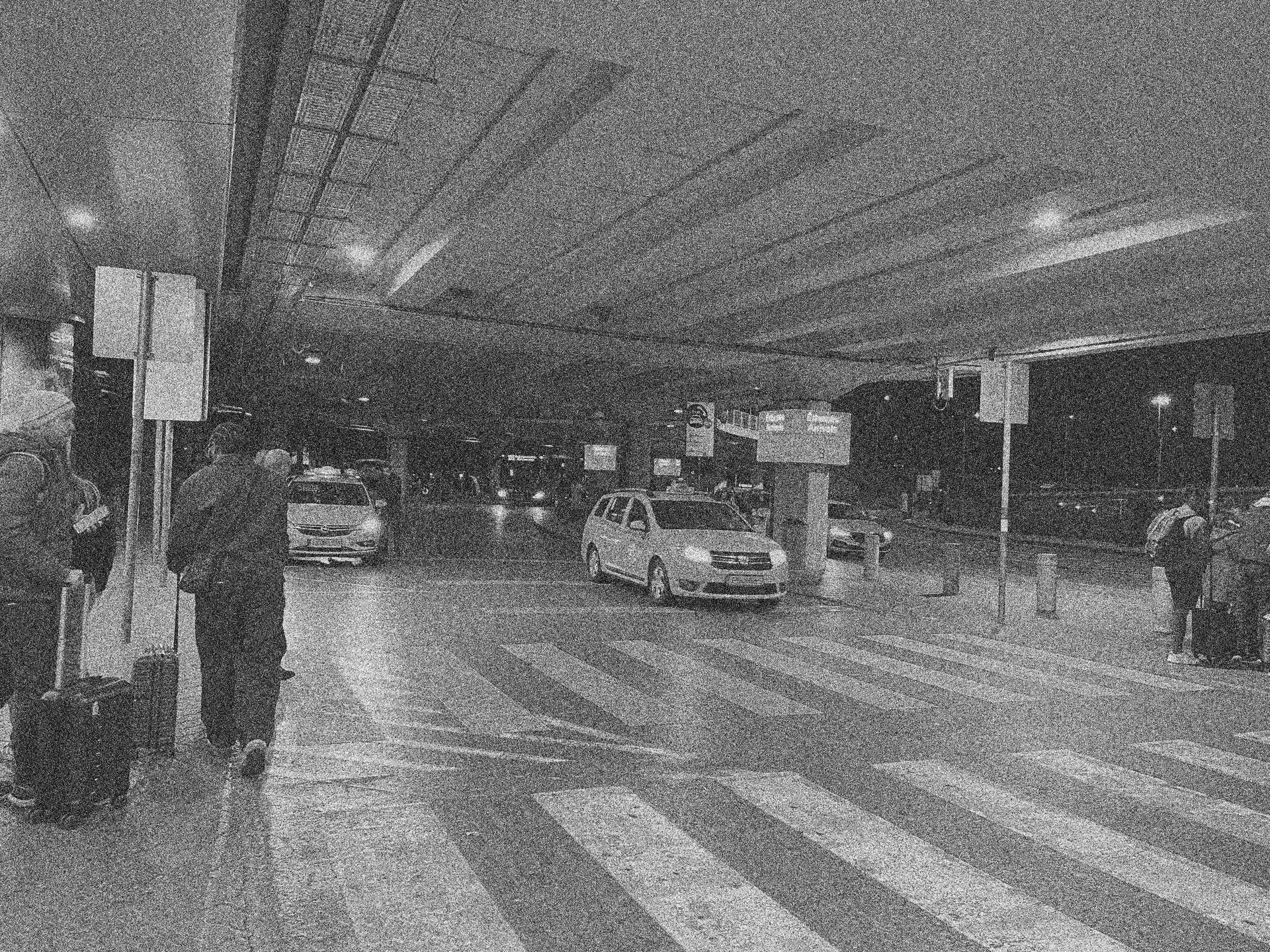
A grainy, black and white overhead view of a street at night with cars and pedestrians, suitable for security camera testing.

Security & Surveillance
Camera Testing Services

Send your security and surveillance cameras to our independent iQ-Lab for objective image-quality testing — against IEC 62676-5, ISO 12233 and ISO 19093, including climate-controlled testing under real-world conditions.

Why Independent Surveillance Testing Matters

Security Camera Testing | Most public spaces are now under surveillance, and more cameras are installed every day. But safety depends on the quality of the image, not the number of cameras: a system that cannot resolve a face or a license plate, or that loses the scene the moment the light drops, offers little real protection. IEC 62676-5 addresses exactly this. The international standard defines eight image-quality metrics for surveillance camera devices. Among them resolution, minimum illumination (low-light), dynamic range, infrared illumination, geometric distortion, veiling flare and maximum frame rate. Like automotive systems, surveillance cameras also have to perform in constantly changing light and weather. As a neutral, independent test lab positioned between manufacturers, integrators and end users, we measure these factors objectively and report them against the standard, so you know what your cameras actually deliver in the field, not just on the data sheet.

  • Most public spaces are now under surveillance, and more cameras are installed every day. But safety depends on the quality of the image, not the number of cameras: a system that cannot resolve a face or a license plate, or that loses the scene the moment the light drops, offers little real protection.

  • IEC 62676-5 addresses exactly this. The international standard defines eight image-quality metrics for surveillance camera devices. Among them resolution, minimum illumination (low-light), dynamic range, infrared illumination, geometric distortion, veiling flare and maximum frame rate. Like automotive systems, surveillance cameras also have to perform in constantly changing light and weather.

  • As a neutral, independent test lab positioned between manufacturers, integrators and end users, we measure these factors objectively and report them against the standard, so you know what your cameras actually deliver in the field, not just on the data sheet.

What we Measure in Surveillance Testing

ISO 12233 Resolution

SFR · ISO 12233
Spatial frequency response captures how much fine detail the camera resolves, while texture analysis reveals how aggressively noise reduction smears away low-contrast structures such as hair, foliage and fabric.

ISO 19093 Low-Light Performance

How image quality holds up as scene illumination drops, and whether the camera keeps usable detail through the night.

IEC 62676-5 Dynamic Range

The simultaneous capture of bright and dark scene content — performance against backlight, headlights and harsh shadows.

IEC 62676-5 Infrared Illumination

Behavior and sensitivity under near-infrared illumination for reliable night-time operation.

IEC 62676-5 Geometric Distortion

Lens distortion that bends straight lines and shifts the apparent position of objects in the scene.

IEC 62676-5 Veiling Flare

Stray light and glare from bright sources in or near the frame that wash out contrast and detail.

IEC 62676-5 Maximum Frame Rate

The sustained frame rate available for capturing fast-moving subjects without dropped or blurred detail.

Climate-Controlled Performance

Image quality across the temperature and weather extremes outdoor cameras face — from −40 °C to +120 °C.

Relevant Standards for Surveillance Cameras

The crucial industry standards we test and report against for surveillance camera image quality.

IEC 62676-5

The leading international standard for the image-quality performance of security and surveillance cameras.

IEC 62676-5-1

An addition (subpart) to the primary standard that outlines performance thresholds to be maintained under changing weather conditions and temperature fluctuations.

ISO 12233:2024 — Resolution

Specifies methods for measuring the resolution and SFR (spatial frequency response) of camera systems

ISO 19093:2018 — Low-Light

Defines thresholds and test methods for determining whether a camera system produces acceptable image quality in low-light scenes.

Prefer to Test In-House?

If you would rather run surveillance image-quality tests in your own facility, we supply the charts, light sources, climate chamber and analysis software behind the lab. Full specifications live on each product page.

TE42-LL

Multipurpose low-light test chart for evaluating multiple image-quality factors in a single capture.

GEOCAL

Geometric calibration target for measuring and removing image distortion using GEOCAL and OpenCV

iQ-Climate Chamber

Temperature-controlled testing from −40 °C to +120 °C in the comfort of your own camera test lab.

iQ-Analyzer-X

Analysis software for objective evaluation of the camera's performance across image-quality factors.

iQ-Lab Test Service

Let the iQ-Lab put your cameras to the test

Send us your cameras and our iQ-Lab will characterize their image quality under controlled, reproducible conditions — across the full IEC 62676-5 metric set, plus resolution to ISO 12233 and low-light performance to ISO 19093. For most clients the lab supports preliminary investigations: design validation, supplier comparison and benchmarking ahead of a release decision. In several projects, the measurement data we produced has gone on to support qualification and acceptance documentation directly. As one of the world's longest-standing independent camera test labs, we even contributed to the publication of IEC 62676-5 itself.

Independent & objective

A neutral third-party result, free of vendor bias, that holds up in front of integrators, customers and management alike.

Real-world conditions

Climate-controlled testing in our iQ-Climate Chamber (−40 °C to +120 °C), plus low-light, infrared and high-dynamic-range scenes that mirror how cameras are actually deployed.

Standards-aligned data

Full, traceable reporting against IEC 62676-5, ISO 12233 and ISO 19093 — results your engineering and compliance teams can act on.

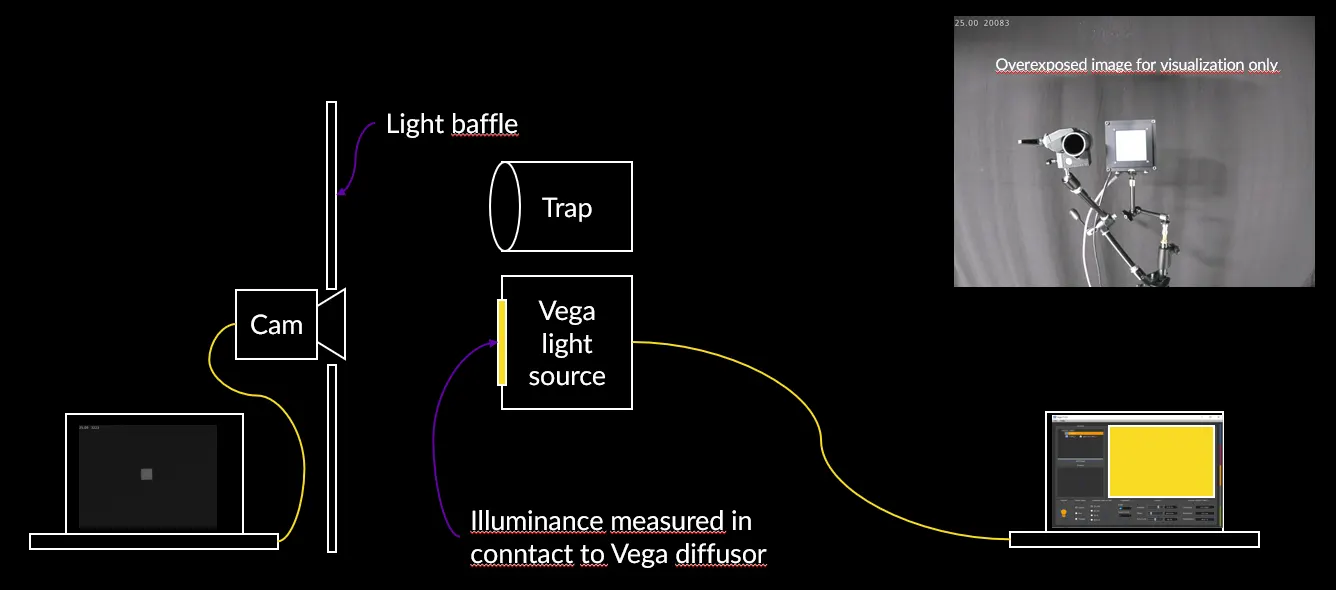
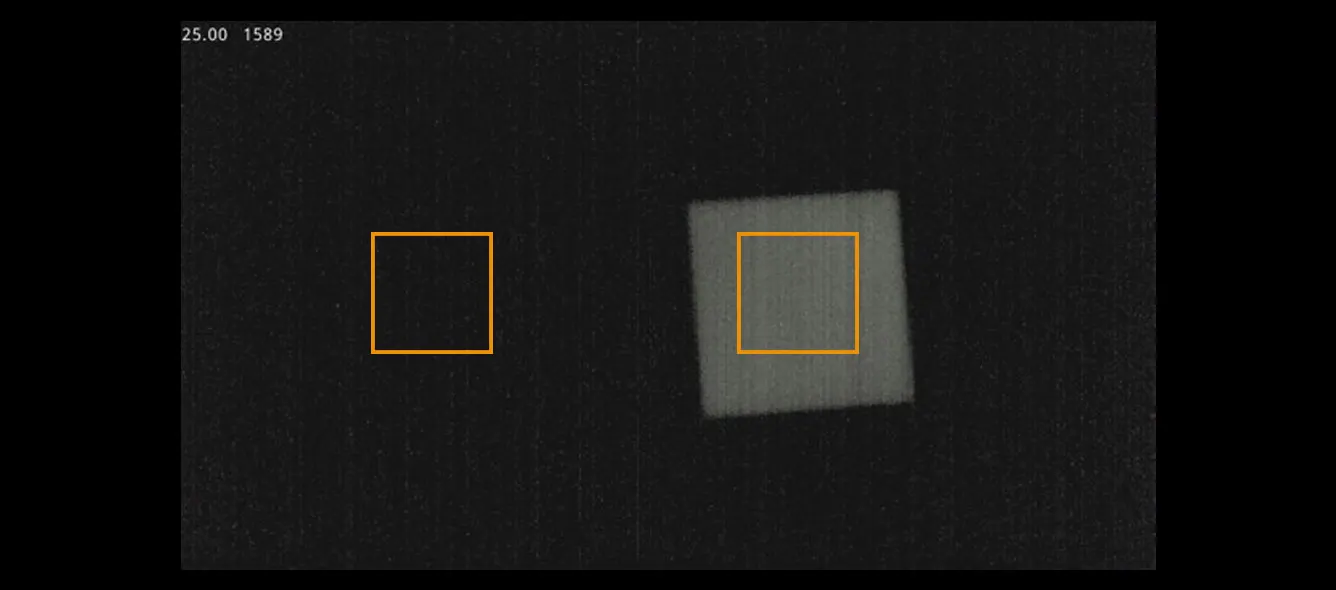
Minimum Illuminance

Setup

Camera 1

Bright [DV] = 91.562

Dark [DV] = 24.445

Delta [DV] = 67.117

Min. Illum [Lux] = 0.006 Lux

Distance = 600 mm

Ready to Transform Your Vision?

Need help with

image quality testing?

Phone (DE): +49 2273 99 99 1-0
Phone (USA): +1 408 386 1496
Phone (China): +86 158 8961 9096
Office Hours: Mon–Fri, 9–5 PM (CET)