
Evaluating Image Quality Under Real-World Conditions
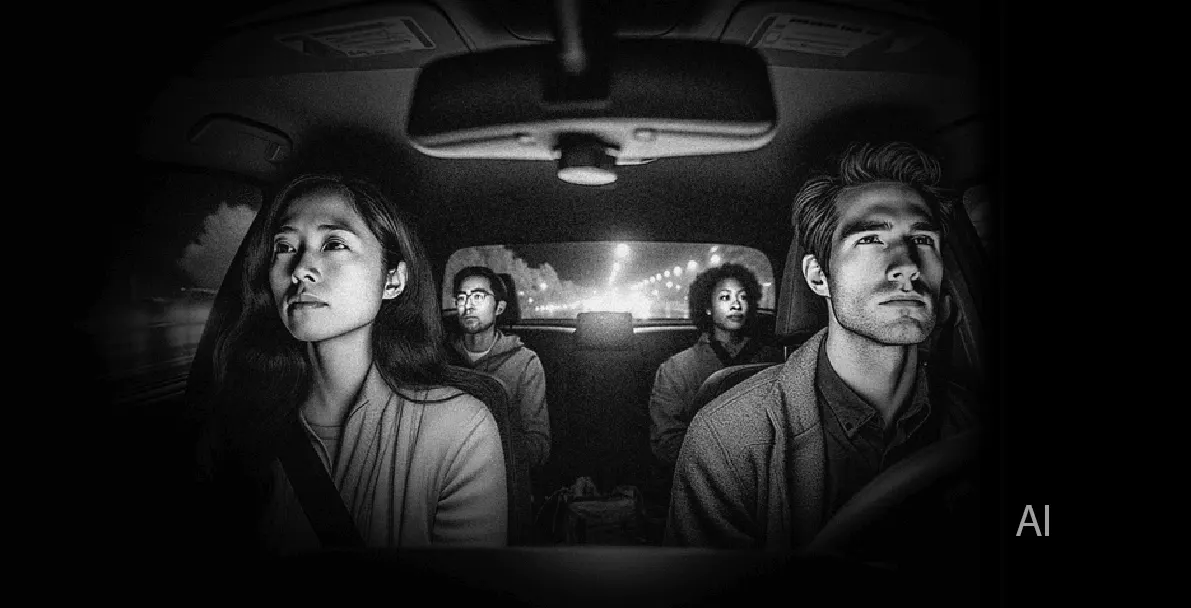
Modern vehicles no longer observe only their surroundings. Driver and Occupant Monitoring Systems (DMS/OMS) analyze what happens inside the cabin, from gaze direction and driver drowsiness to occupant position and behavior. Many of these systems rely on invisible NIR illumination. To ensure reliable performance, they must also be tested under those exact conditions.
For a long time, vehicle cameras had one primary task: looking outward. Today, that has changed. Driver Monitoring Systems (DMS) and Occupant Monitoring Systems (OMS) observe the vehicle interior and provide essential information for safety and comfort. They can detect drowsiness and distraction, analyze driver gaze direction, and determine occupant position.
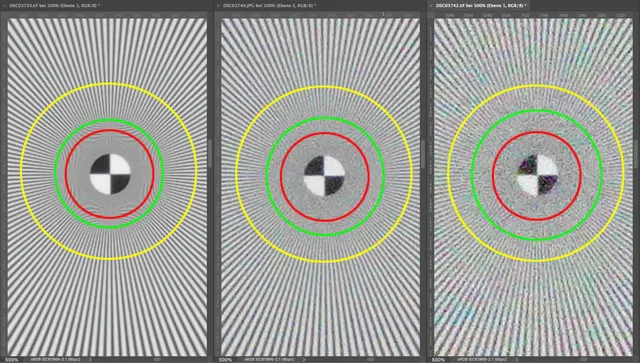
To perform reliably, these systems require cameras that deliver consistent and reproducible results under demanding conditions. To objectively assess system performance, a variety of image quality parameters must be analyzed. These include resolution (SFR), distortion, dynamic range (OECF), noise (SNR), and temporal characteristics.
Testing becomes particularly challenging when Near Infrared (NIR) illumination is involved. Many in-cabin systems operate with active infrared illumination at 850 or 940 nm. While this light is invisible to vehicle occupants, it is critical for camera performance. Testing under visible light alone is therefore insufficient to evaluate the actual performance of such camera systems. The test environment must reproduce real-world conditions as accurately as possible, including the NIR illumination used in the application. Learn more about in-cabin testing here.
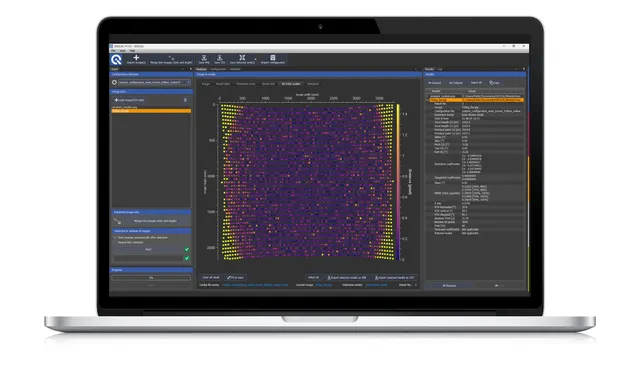
This is where Vega IR comes in. The new light source extends our Vega platform into the near-infrared spectrum and has been specifically developed for the characterization of cameras under 940 nm illumination. Among other capabilities, Vega IR enables measurements of Contrast Transfer Accuracy (CTA) and Contrast Signal-to-Noise Ratio (CSNR) in accordance with IEEE-2020:2024. Its radiometrically defined NIR illumination and the high stability of the DC-driven light source provide reproducible test conditions, even at very short exposure times.
An integrated flicker function allows temporally modulated infrared illumination to be reproduced realistically, making it possible to investigate its impact on camera system performance.
The goal is not simply to test a camera under as many conditions as possible. The objective is to reproduce relevant conditions in a defined manner and generate reproducible measurement results. Why? Because developers need to know more than whether a camera system works. They need to know how well it works and whether the same result can be achieved consistently under comparable conditions.