
Overview
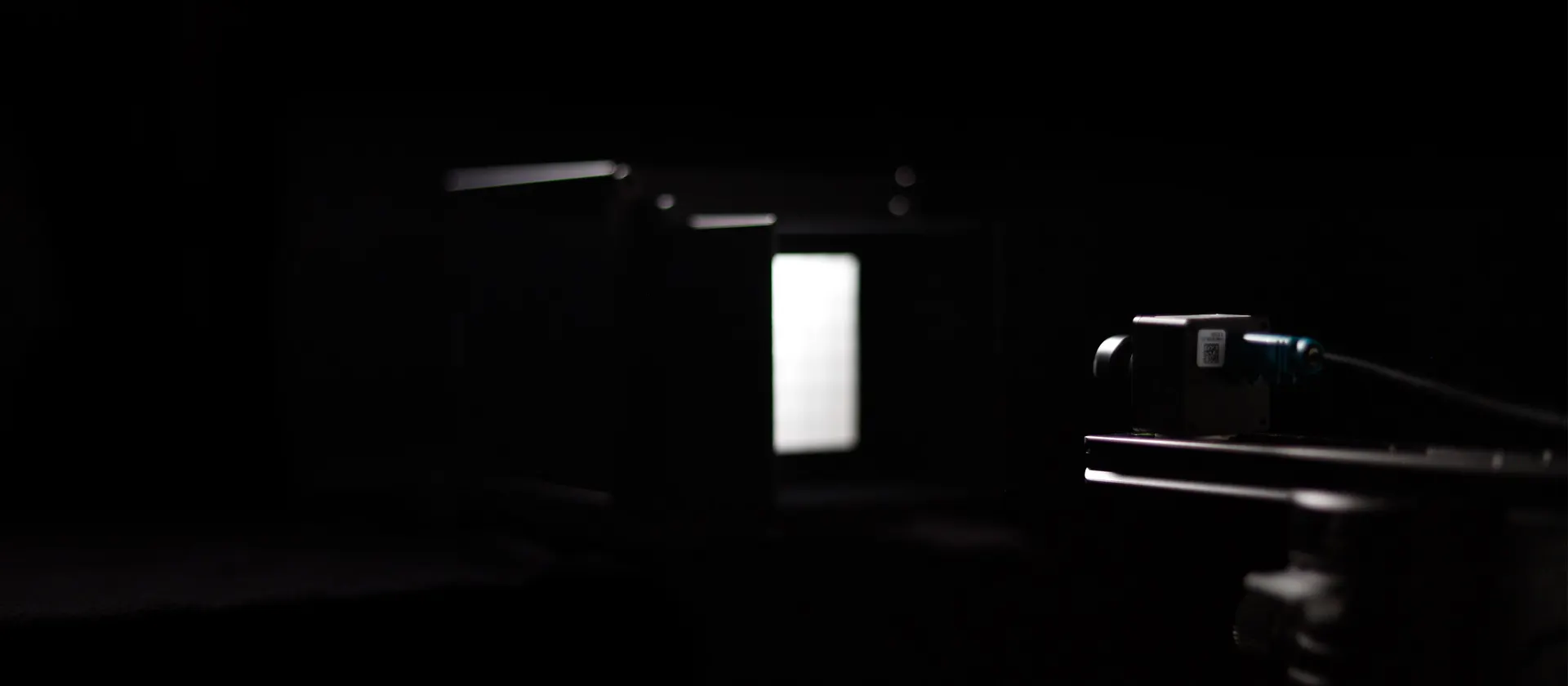
Automotive Camera Testing - Modern vehicles see the road through a growing number of exterior cameras. Front cameras read lane markings, traffic signs, and pedestrians; surround-view and parking cameras stitch a seamless picture around the vehicle; rear and corner cameras feed cross-traffic and blind-spot functions. Every one of these systems makes safety-relevant decisions from the image it captures, so the quality of that image is never just a specification, it is a question of how reliably the vehicle perceives its environment. For years, the automotive industry assessed that image quality with a patchwork of in-house methods and adapted consumer-camera metrics. With IEEE 2020, the industry finally has a common language: a standardized suite of objective and subjective test methods, defined specifically for automotive cameras and agreed across OEMs and suppliers. This is where our iQ-Lab comes in. We test exterior automotive cameras against the methods and metrics of IEEE 2020 and report results you can act on, whether you are choosing a sensor, validating a supplier delivery, or benchmarking your own design against the field.
Modern vehicles see the road through a growing number of exterior cameras. Front cameras read lane markings, traffic signs, and pedestrians; surround-view and parking cameras stitch a seamless picture around the vehicle; rear and corner cameras feed cross-traffic and blind-spot functions. Every one of these systems makes safety-relevant decisions from the image it captures, so the quality of that image is never just a specification, it is a question of how reliably the vehicle perceives its environment.
For years, the automotive industry assessed that image quality with a patchwork of in-house methods and adapted consumer-camera metrics. With IEEE 2020, the industry finally has a common language: a standardized suite of objective and subjective test methods, defined specifically for automotive cameras and agreed across OEMs and suppliers.
This is where our iQ-Lab comes in. We test exterior automotive cameras against the methods and metrics of IEEE 2020 and report results you can act on, whether you are choosing a sensor, validating a supplier delivery, or benchmarking your own design against the field.
What we Test
Image quality KPIs measured to the methods of IEEE 2020
Contrast (CTA & CSNR)
Dynamic Range (HDR)
Sharpness & Resolution (SFR)
Noise & SNR
LED Flicker Mitigation
Geometric Calibration & Distortion
Surround-view stitching and object placement depend on an accurate camera model. We validate geometric calibration and characterize distortion across wide and ultra-wide fields of view.
International Standards relevant to Automotive
The standards behind objective automotive camera image quality testing.
IEEE Std 2020-2024
EMVA 1288 / ISO 24942
ISO 19093
Defines methods and metric thresholds for evaluating camera performance under low-light conditions — a critical regime for exterior automotive cameras operating at night and in poor weather.
Neutral ground between OEM and supplier
The iQ-Lab advantage
Image quality data is only as useful as it is trusted. As an independent test house, and an active member of the IEEE-P2020 working group, our iQ-Lab sits deliberately between the OEM and the supplier, with no stake in the outcome other than getting the measurement right.
That neutrality is the product. A supplier can prove that delivered hardware meets the manufacturer's requirements with a report neither side wrote. A manufacturer can compare sensors and modules from competing vendors on identical, standard-based terms. Both sides keep the results confidential, shared only between Image Engineering and the customer.
We deliver this through camPAS (Camera Performance for Automotive Systems) — our customizable automotive test program.
camPAS is not an off-the-shelf checklist: we design the test around your specifications and use case, draw on the methods of IEEE 2020, and hand back objective KPIs your engineers can build decisions on.
For manufacturers (OEMs)
Choose the right sensor or module from a crowded field. We run identical, standard-based tests across candidates so your selection rests on objective performance data, not vendor datasheets.
For suppliers (Tier 1/Tier 2)
Validate before you ship. We characterize your camera or sensor during development and before delivery, flag image quality issues early, and give you the evidence to prove your hardware meets the manufacturer's KPIs.
Confidential & standard-based
Results stay between you and us. Tests follow recognized methods — above all IEEE 2020 — so the numbers mean the same thing to everyone at the table.
Contrast Transfer Accuracy (CTA)
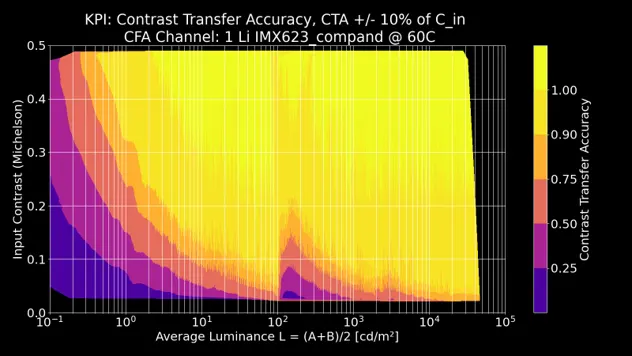
Detection starts with contrast. Before an algorithm can recognize a pedestrian, a lane line, or a vehicle, the camera has to reproduce the contrast between that object and its surroundings — across every combination of brightness and contrast the road throws at it.
Contrast transfer accuracy (CTA) is the IEEE 2020 metric that puts a number on exactly this. For a given scene contrast, CTA is the probability that the camera reproduces that contrast within a defined tolerance band. The result is not a single score but a map: CTA plotted across luminance and contrast, showing precisely where the system holds contrast reliably and where it breaks down — for instance in high-flare scenes or at the limits of an HDR sensor, where traditional signal-to-noise figures can mislead.
For exterior automotive cameras, that map is gold. It turns "the image looks fine" into a defensible statement about where, and how reliably, the system can be trusted to see.
−40 °C to +120 °C, characterized in one place
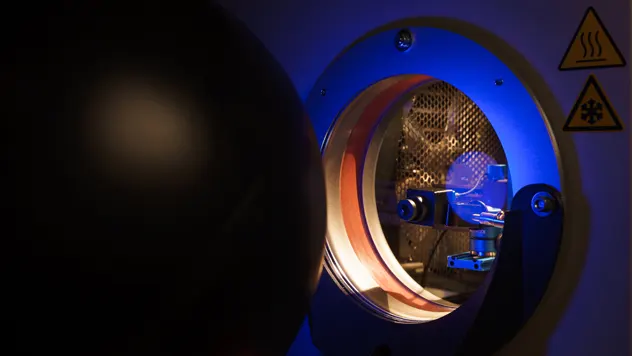
An automotive camera does not live in a comfortable lab. It bakes behind a windscreen in the summer sun and starts up in arctic cold — and IEEE 2020 is explicit that temperature has a strong effect on noise, dynamic range, sharpness, and even geometric calibration. A result measured only at room temperature tells you only part of the story.
We close that gap with the iQ-Climate Chamber. Almost the entire IEEE 2020 test suite can be run inside it, letting us characterize your camera's image quality across the full automotive operating range — from −40 °C to +120 °C — rather than at a single convenient point. The result is a performance profile that reflects where the camera actually has to work.
Prefer to Test In-House?
Vega
Arcturus
Test Charts
iQ-Climate Chamber
GEOCAL
iQ-Analyzer-X
Advanced software for evaluating a wide range of image quality factors, with automotive-relevant analysis modules to turn captured images into KPIs.